
Interviews
The Brutalist cinematographer Lol Crawley
“I know it’s probably not my place to say it because I’m involved with the film, but I really hope that (The Brutalist) is inspiring (and shows other filmmakers) that […]
“I know it’s probably not my place to say it because I’m involved with the film, but I really hope that (The Brutalist) is inspiring (and shows other filmmakers) that […]
“I know it’s probably not my place to say it because I’m involved with the film, but I really hope that (The Brutalist) is inspiring (and shows other filmmakers) that you can make a movie for this amount of money and have it be epic and have it take big swings thematically and creatively. I think it helps to raise the bar and says, ‘We can really have fun with inventive, passionate, big-scale movie-making, and it doesn’t have to always cost $200 million.’” – Lol Crawley
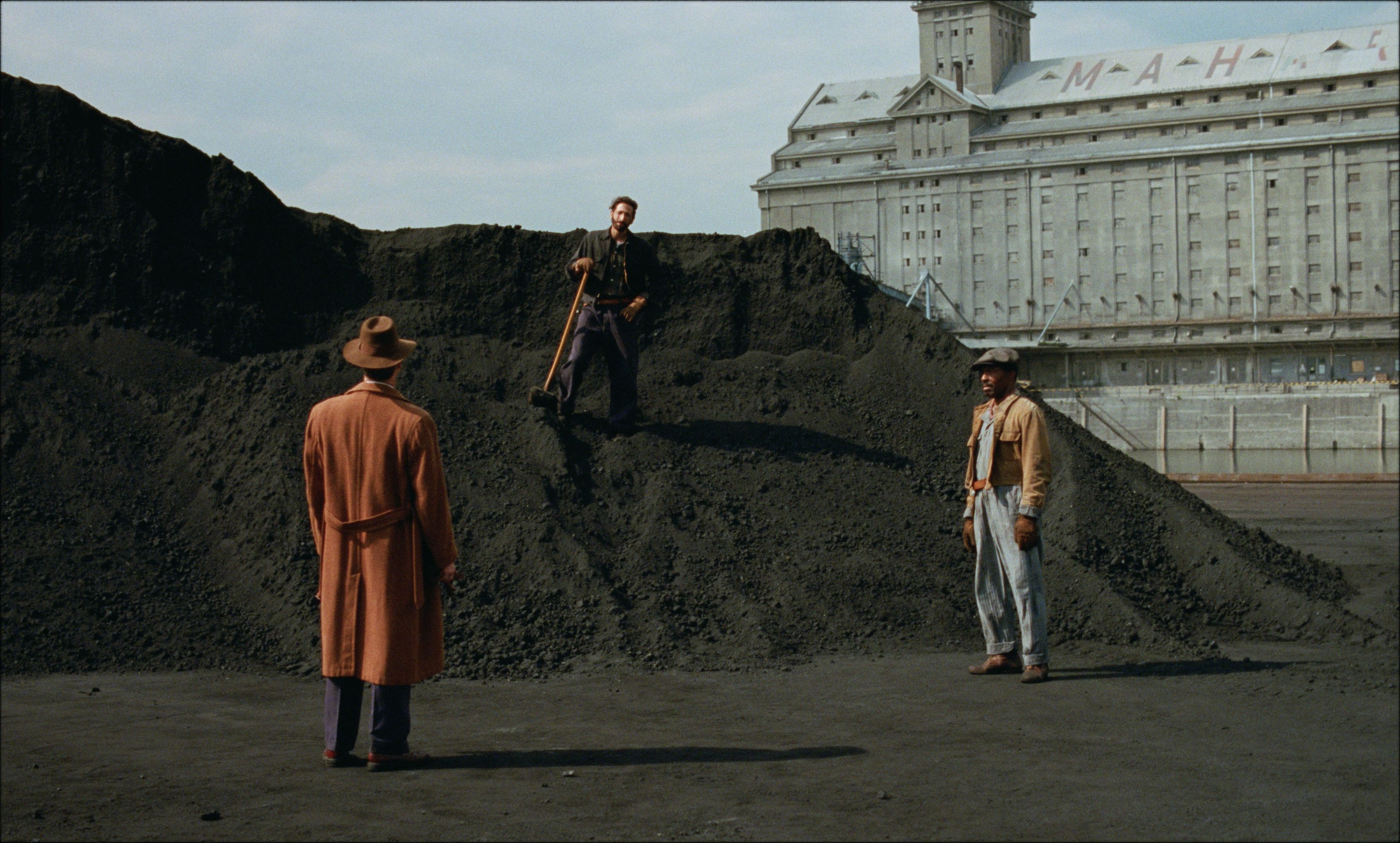
Check out my interview with The Brutalist’s Oscar-winning cinematographer Lol Crawley over at Filmmaker Magazine. Here’s a few excerpts from my piece on the movie, which was shot in 34 days for under $10 million primarily using VistaVision large format film.
Filmmaker: In terms of processing, you underexposed on (your first collaboration with The Brutalist director Brady Corbet) The Childhood of a Leader quite a bit, then push-processed to combat the cleanness of modern stocks. One of the selling points with VistaVision originally was how crisp the image was compared to some of the early anamorphic processes. Did you push-process on The Brutalist again to counter that cleanness?
Crawley: I did, partly to add grit. Every film I’ve shot for Brady has been a period film. Vox Lux is period, even though it’s a recent period. For me, personally, when I’m trying to shoot a period film and feel like the stocks are so good, there’s a lot of conversation about photographic black. I don’t want photographic black; I want the black that I find in a Pieter Bruegel painting, a purple black or a brown black. I want to pull up the colors. Bruegel would not just have used black [paint] as black. It’s about building up these shades. For Childhood of a Leader I looked at Rembrandt paintings and how his shadows are created, and I was like, ‘If we distress the negative and force it and abuse it in some way, push it down in the exposure and then pull it up in post, we can hopefully get a much more painterly image as opposed to a photographic image.’ That’s something Brady and I have run with since.
Crawley on the long oner as László (Adrien Brody) arrives in New York for the first time…
“That was actually (done on) the opposite of the VistaVision camera. That was an Arri 235, which is the smallest 35mm camera you can use, on a boat that was moored on the Danube that they were renovating as a party boat. It was basically this husk of a ship. I used very, very low lighting because if I lifted the ambient up too much you’d see what the ship actually was. So, the idea was that they were going through these small spots of light, and I would just catch moments, which worked perfectly well. There’s this evolution as it gets brighter [as he gets toward the deck]. I operated all of the A Camera work on the movie and for that shot at the end I had to climb up this steep stairwell. So, I’ve got one hand on the camera and the other pulling myself up on this railing. Then you get out [onto the deck] and there’s Adrien spinning around, and we pan off and they seamlessly cut to additional footage that we did of the Statue of Liberty. I really love shooting handheld. I love the idea that you’re working with the performer and responding and connecting. It’s a very magical thing, to be in sync with somebody. In between action and cut, it’s just you and them.”
Crawly on the film’s DigiBeta-shot epilogue…
“I actually really love the look of tape. Anthony Dod Mantle is a guy who I really rate. I love the work that he did on Julien Donkey-Boy and 28 Days Later. I’m from that late 90s/early 2000s school. That’s when I graduated; I love that aesthetic. At that time they were playing against this idea that if you shoot, it had to be 35mm. It felt punk when people started using different formats. We’re at a point now where everything—Alexas, Reds, Sonys—are all trying to emulate 35mm, which is great and I understand why they do it, but I feel like our palette has been reduced. When I started out, you could have MiniDV all the way through to 65mm. You had this wonderful palette to work from. I don’t see that many movies like Julien Donkey-Boy existing aesthetically anymore. I don’t know, maybe it would feel dated, but I like the philosophy that you can work on a format and it doesn’t to be (or emulate) 35mm.
That said, I think Brady in that epilogue was using DigiBeta counter to everything I was just talking about. (laughs) He was almost exploring the crassness of the image. Brady’s always playing with these ideas of modernity versus classicism. It’s like, ‘We used to have this, and now we have that.’ We had this beautiful VistaVision and now we have DigiBeta.'”


 deep fried movies