
Frame By Frame
Frame By Frame – Smile (2022)
Year – 2022 Decade – 2020s Director – Parker Finn Cinematographer – Charlie Sarroff Genre – Horror Keyword – 2020s horror; Cursed Chain Studio – Paramount Filming Locations – New […]
Year – 2022 Decade – 2020s Director – Parker Finn Cinematographer – Charlie Sarroff Genre – Horror Keyword – 2020s horror; Cursed Chain Studio – Paramount Filming Locations – New […]
Year – 2022
Decade – 2020s
Director – Parker Finn
Cinematographer – Charlie Sarroff
Genre – Horror
Keyword – 2020s horror; Cursed Chain
Studio – Paramount
Filming Locations – New Jersey
Shooting Schedule – 33 days
Aspect Ratio – 2.0
Camera – Arri Alexa 65
Lenses – Arri Prime DNAs
Format – large format digital
Post – Smile used a film scan back process (after the digital intermediate, a film out is performed and then re-scanned back into the digital workflow) with the help of FotoKem colorist David Cole, who previously used the process on The Batman and Dune.
Also check out the archive’s collection of frames sorted by category.
The Movie
A malevolent entity that feeds on trauma affixes itself to a therapist (Sosie Bacon) after she witnesses a patient’s suicide. Parker Finn’s directorial debut was originally intended as a streaming exclusive on Paramount Plus, but after an enthusiastic test screening it was shifted to theatrical release and earned $217 million worldwide on a $17 million budget, spawning a sequel.
“Living with trauma can feel almost like you’re cursed and I wanted to see what if that manifested into a real curse and what that might feel like if you were actively being pursued by your trauma.” – Smile director Parer Finn (1)

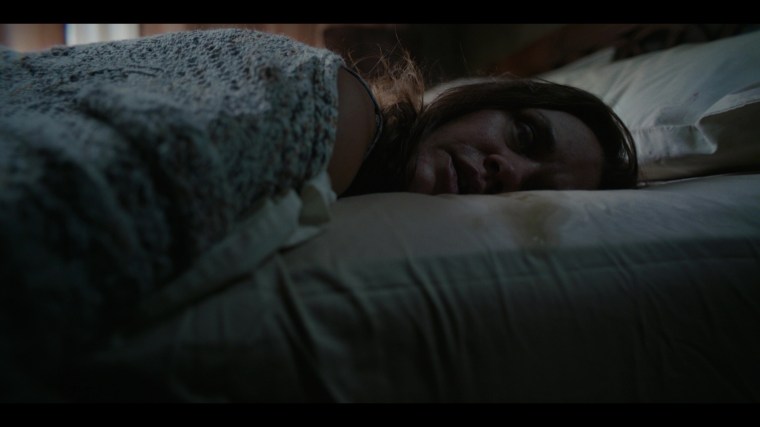

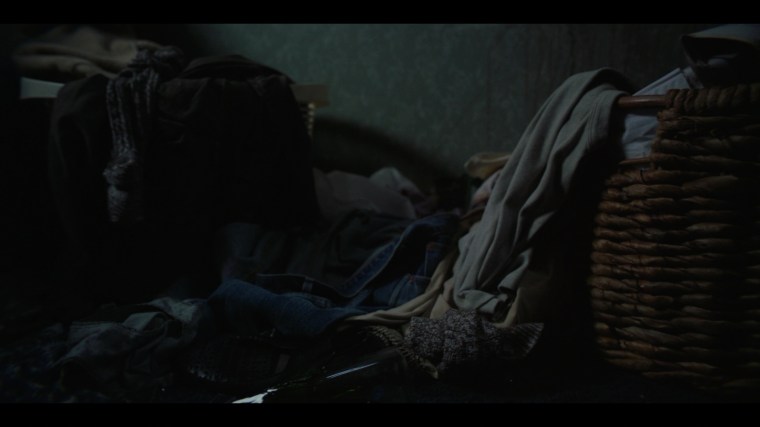


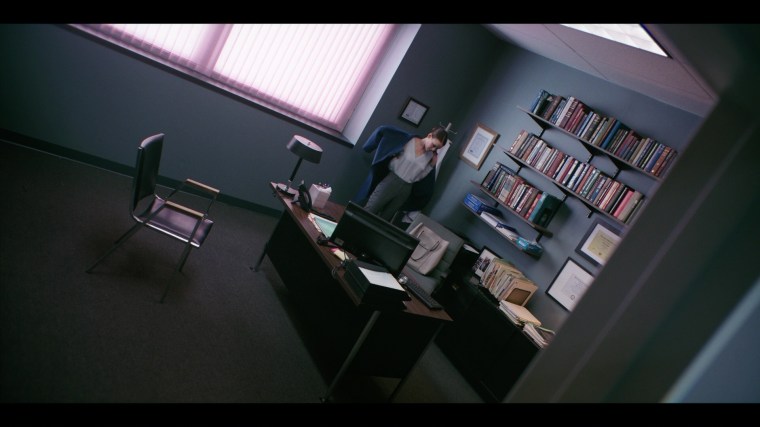


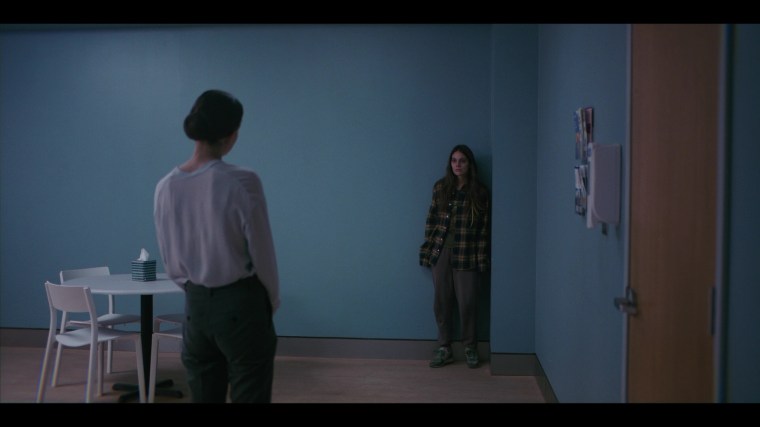
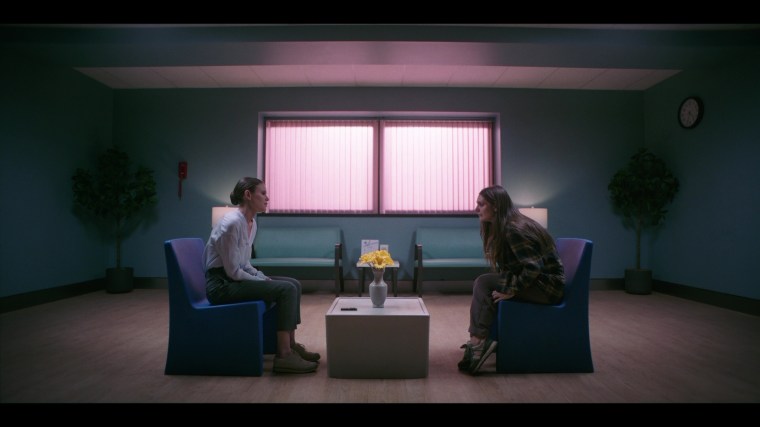




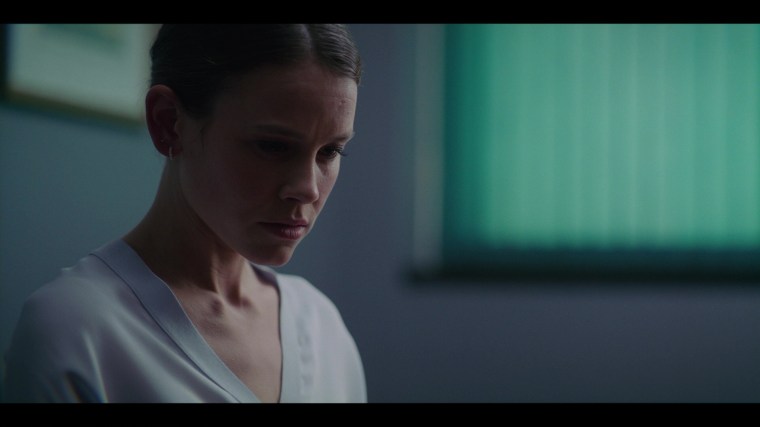


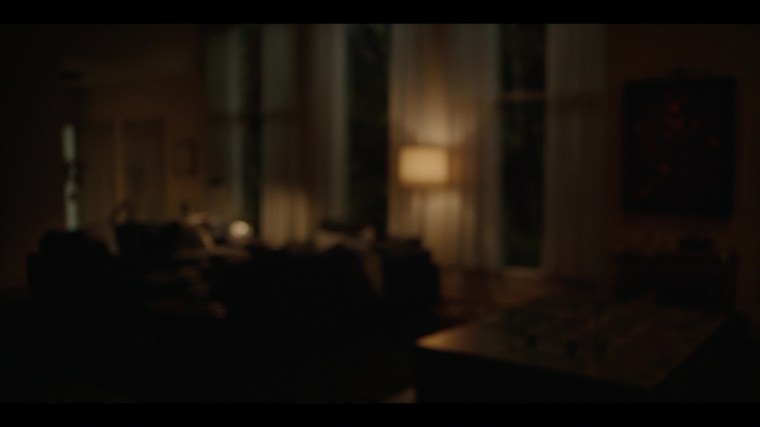


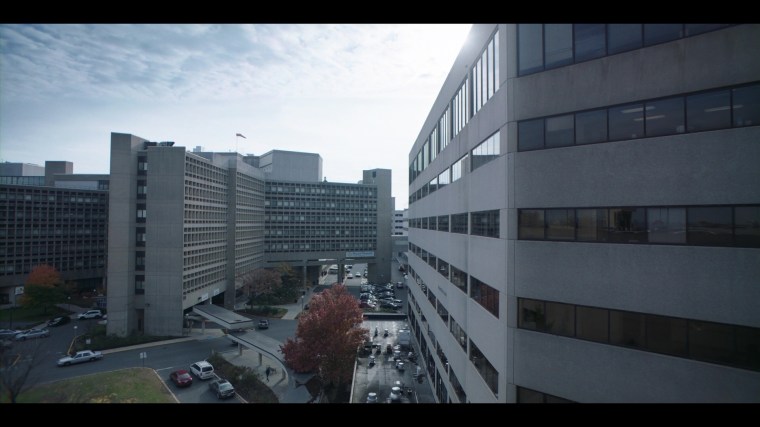


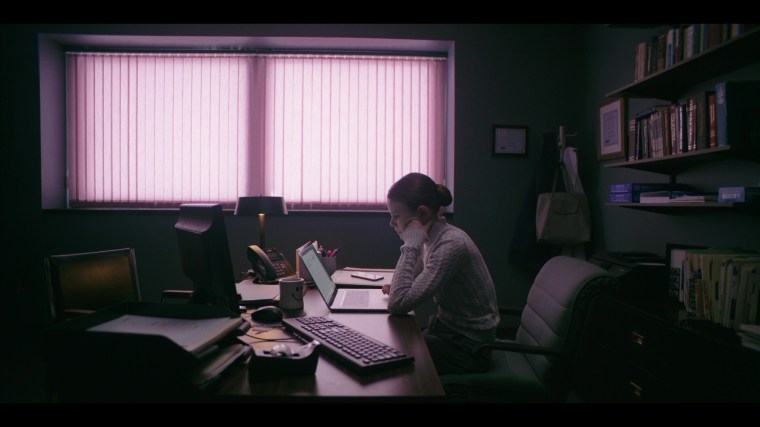


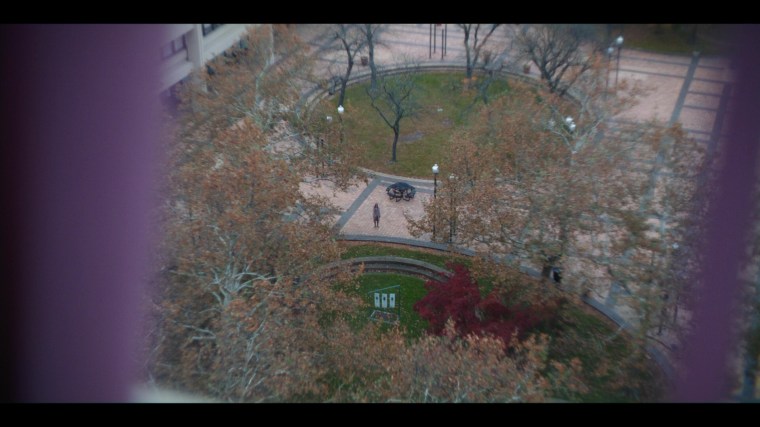


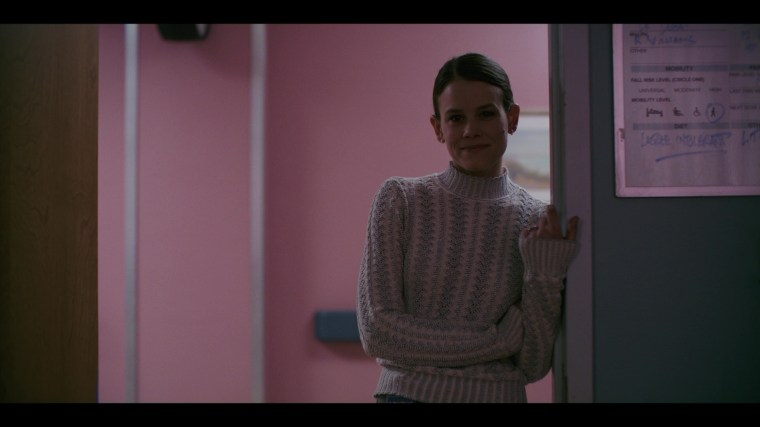

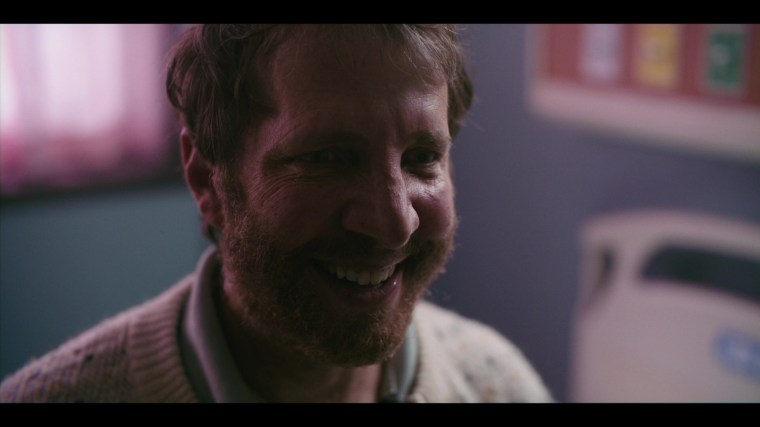
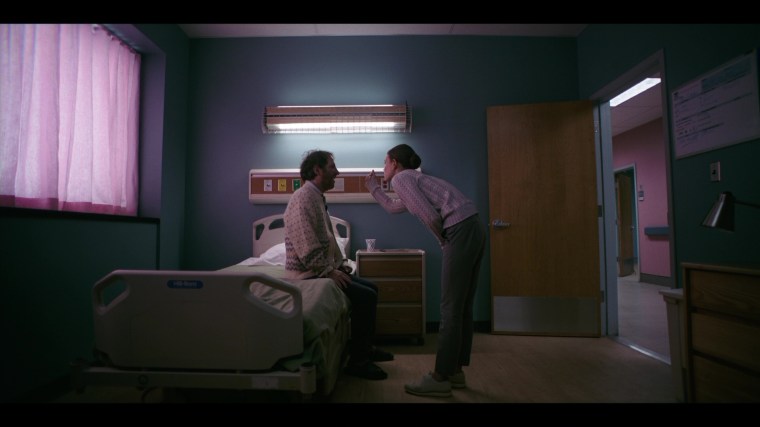

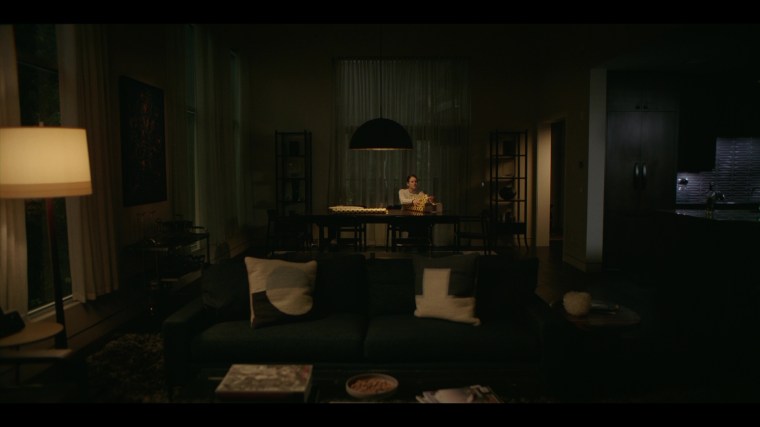


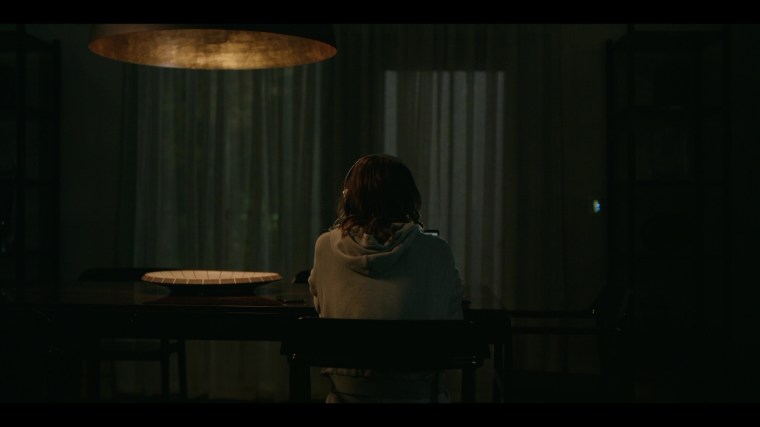


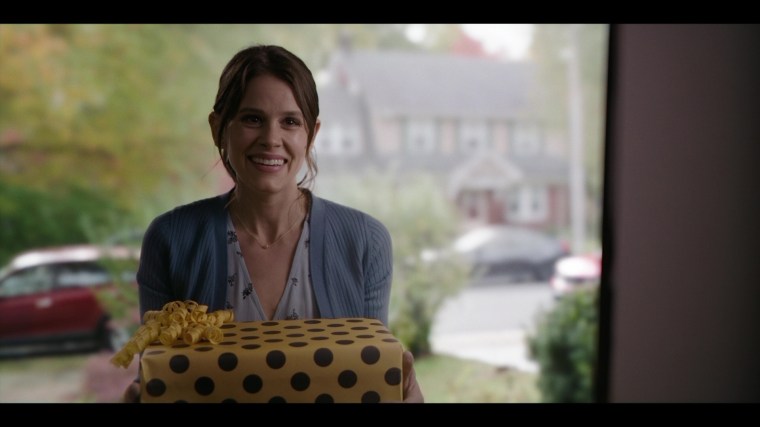

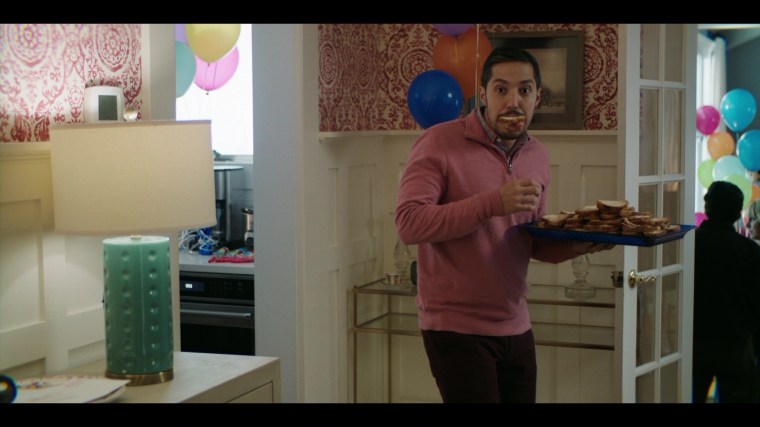

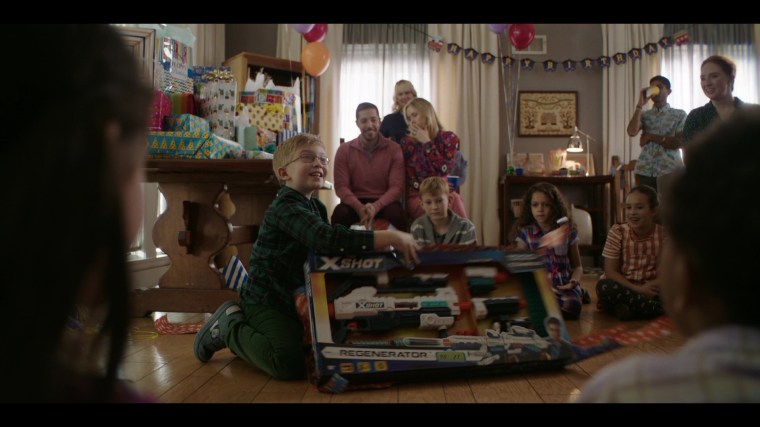
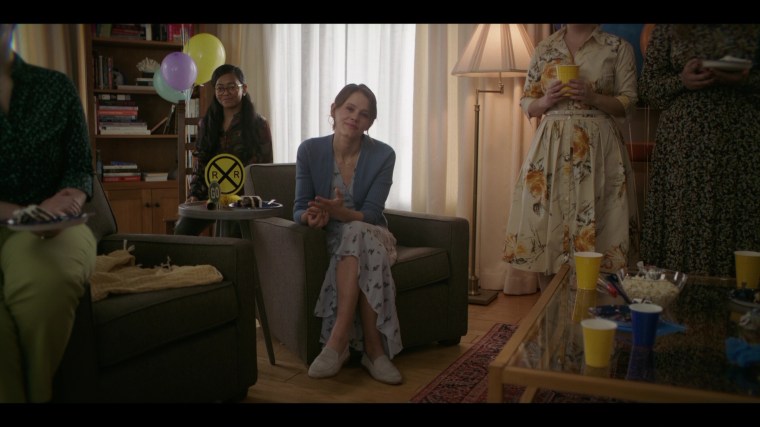


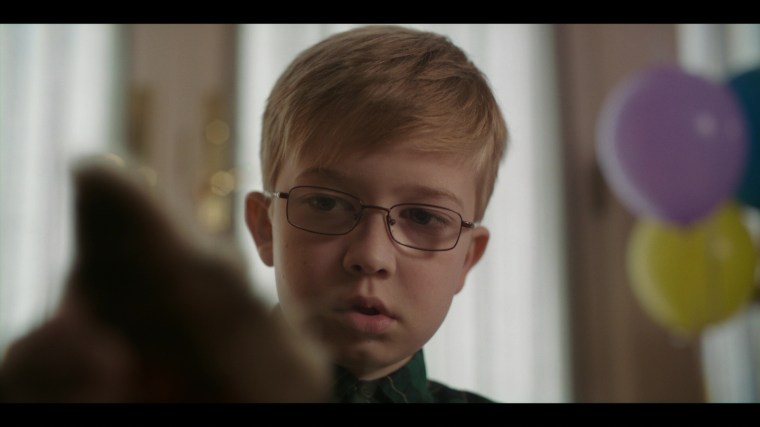
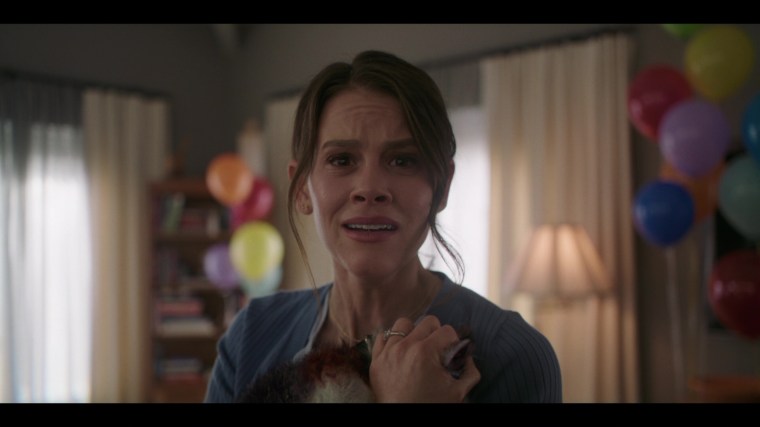
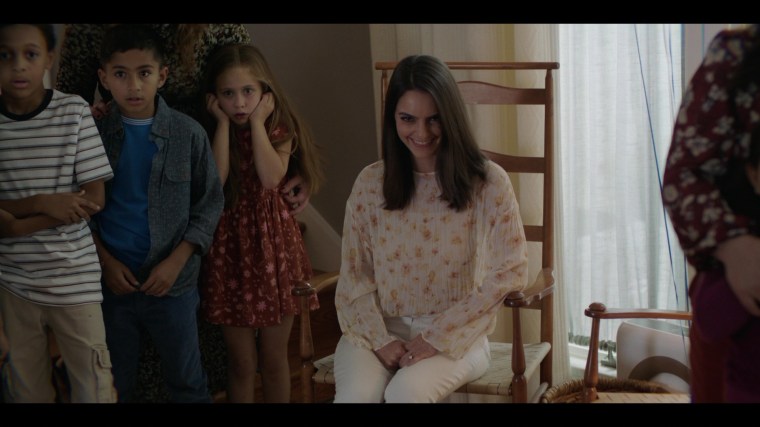



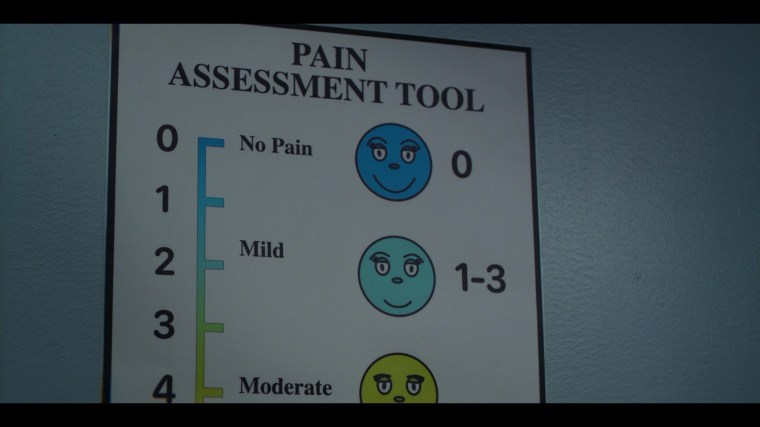


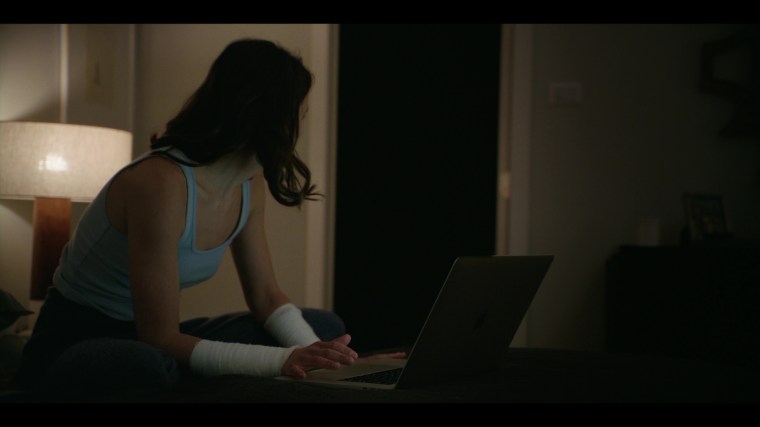


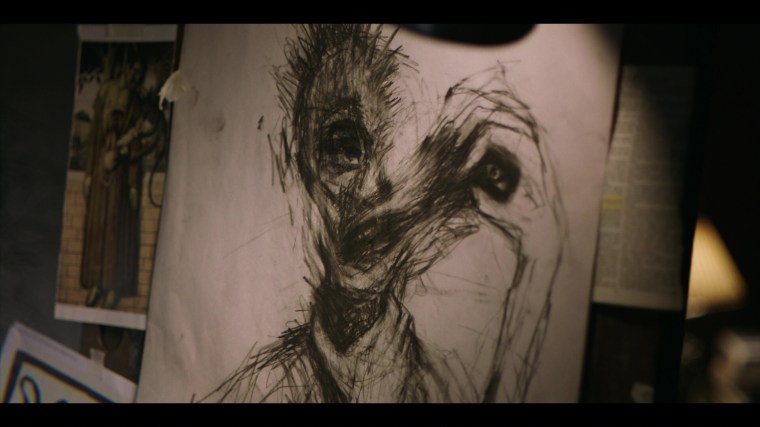


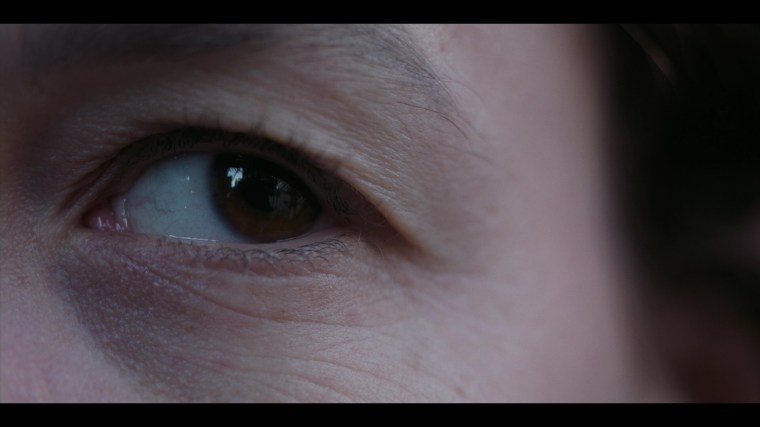

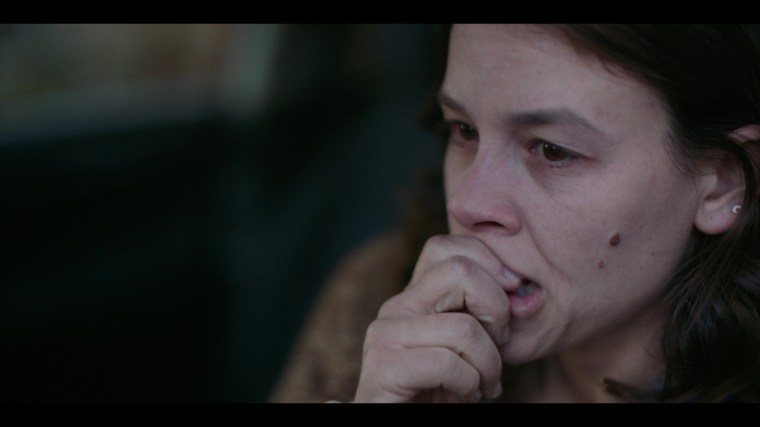





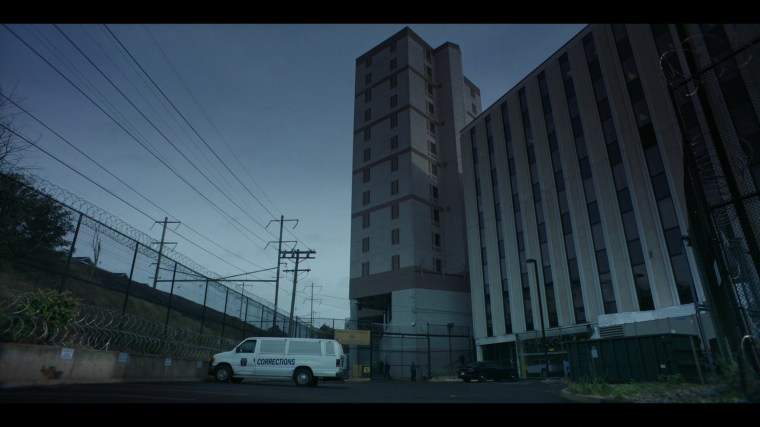


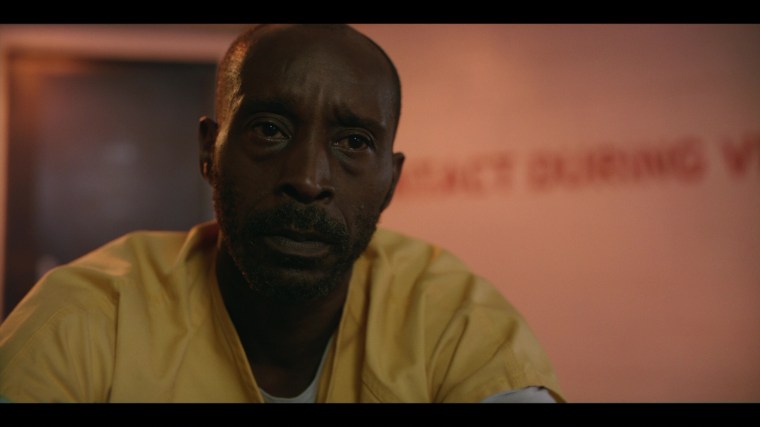
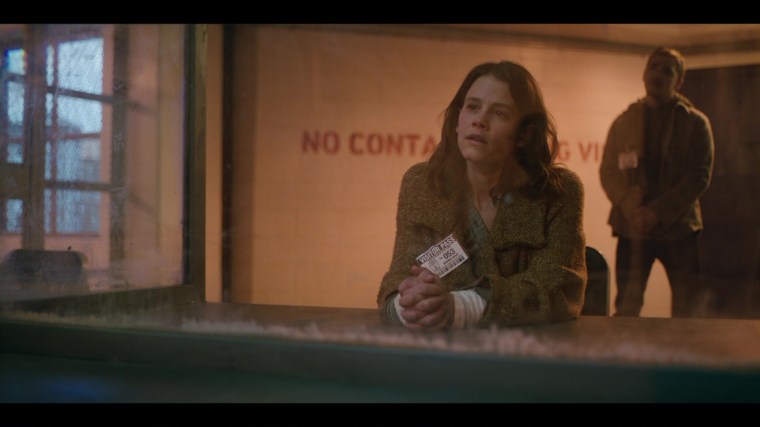
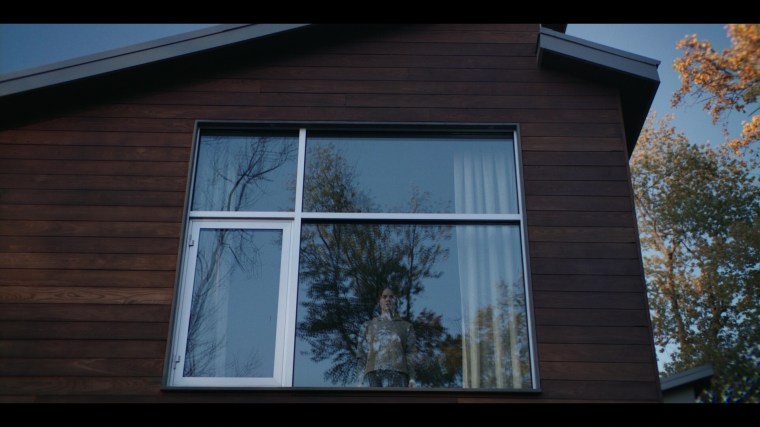


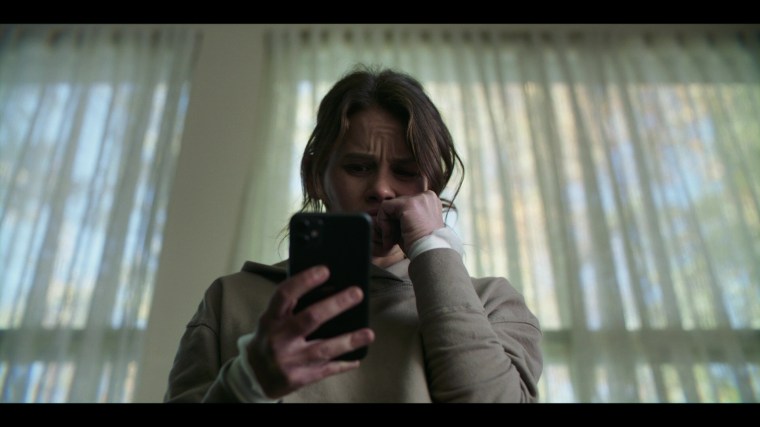

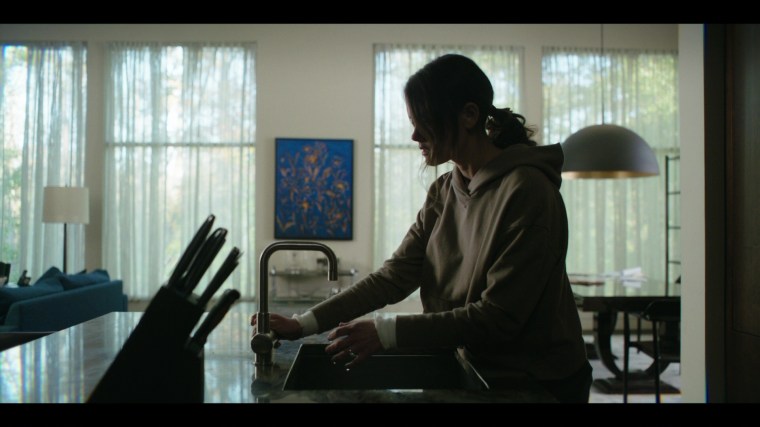


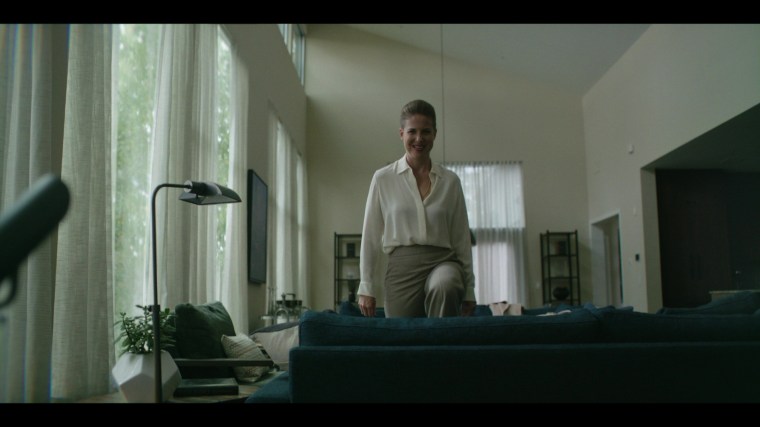


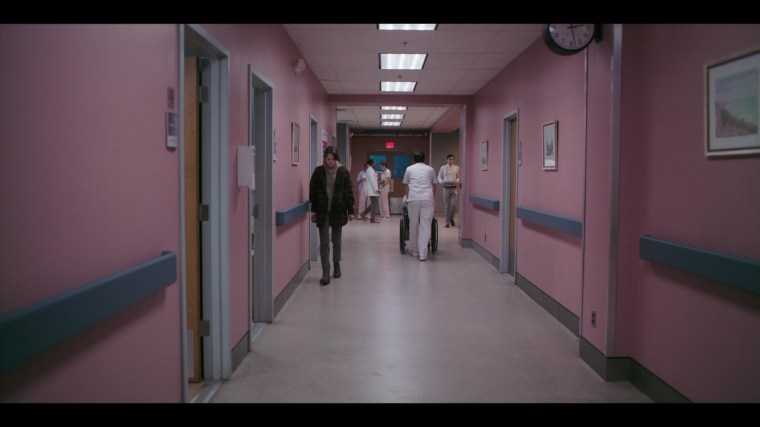
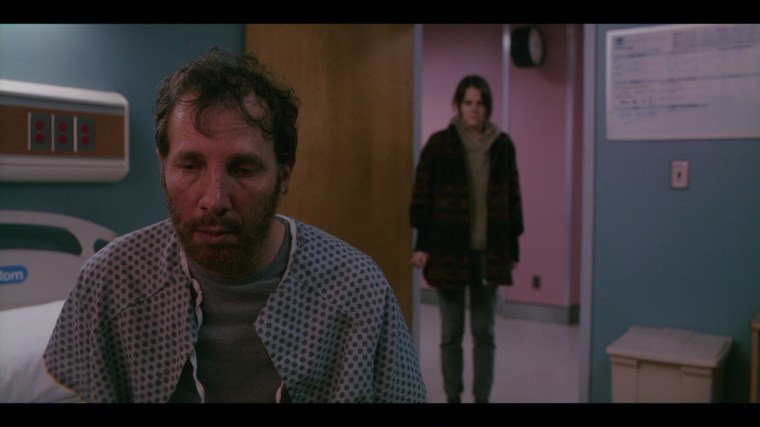
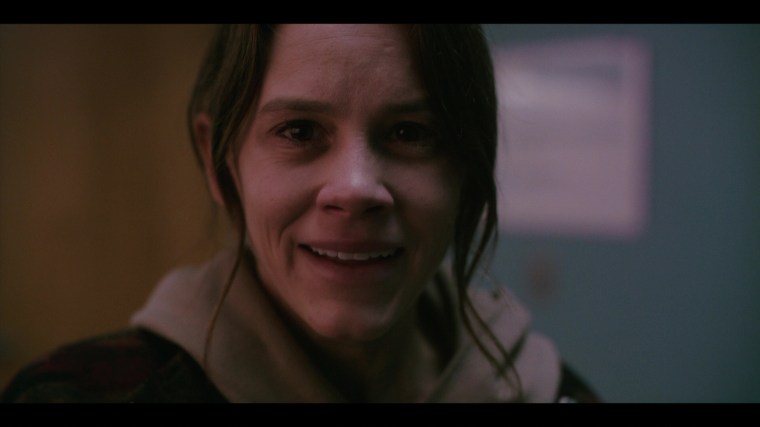
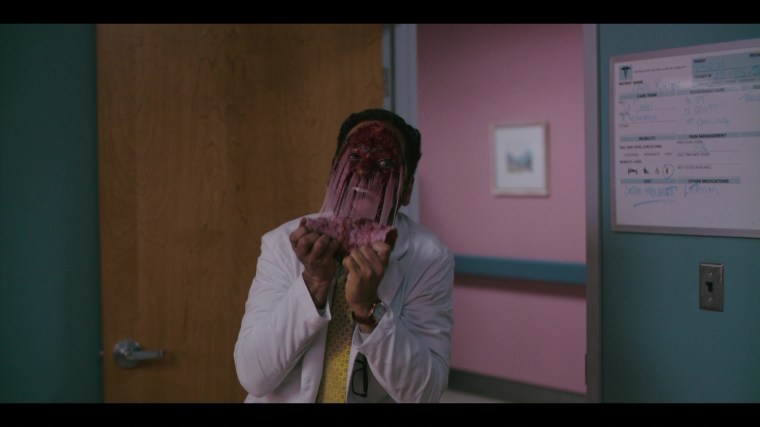


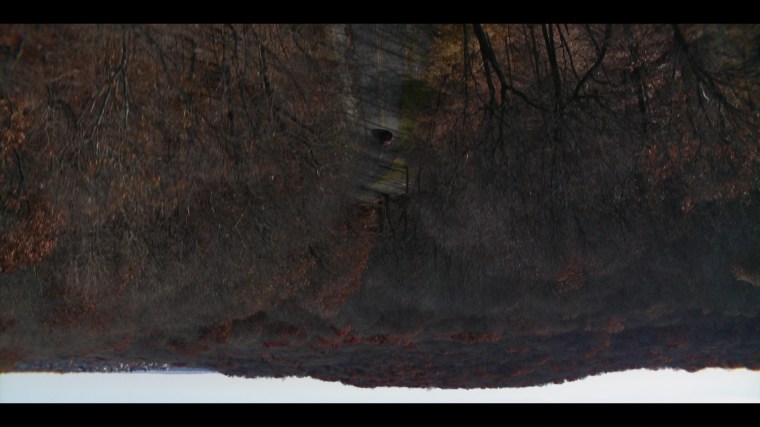


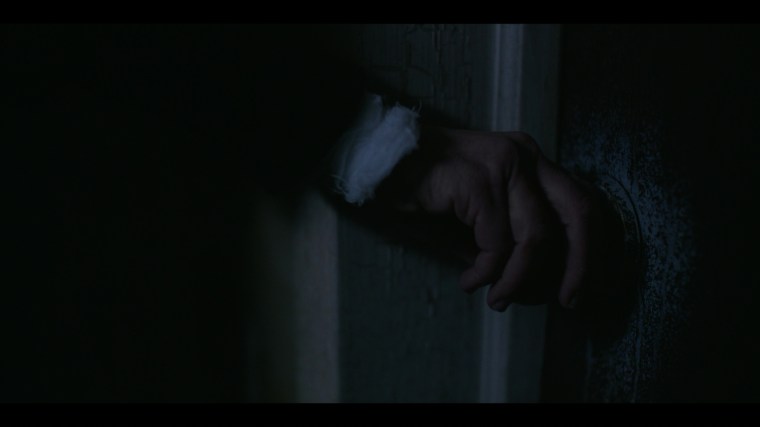







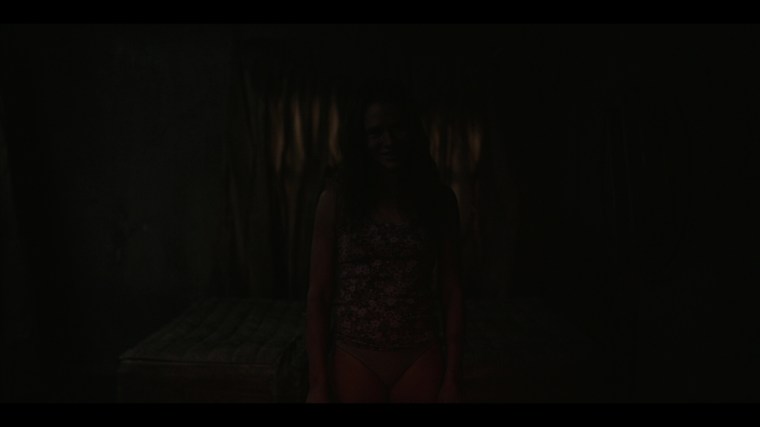


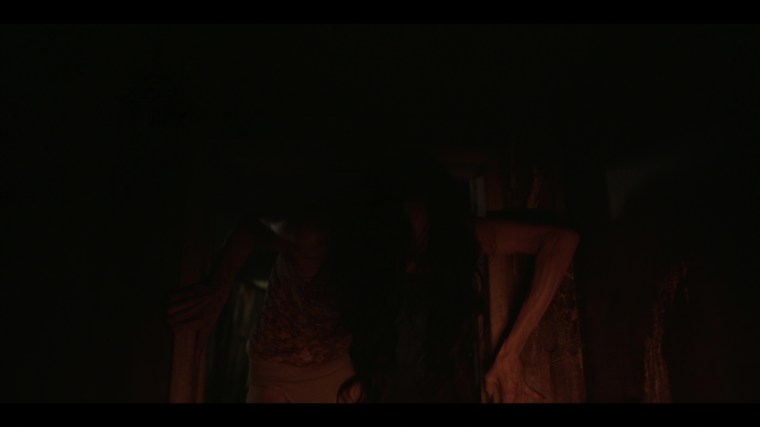

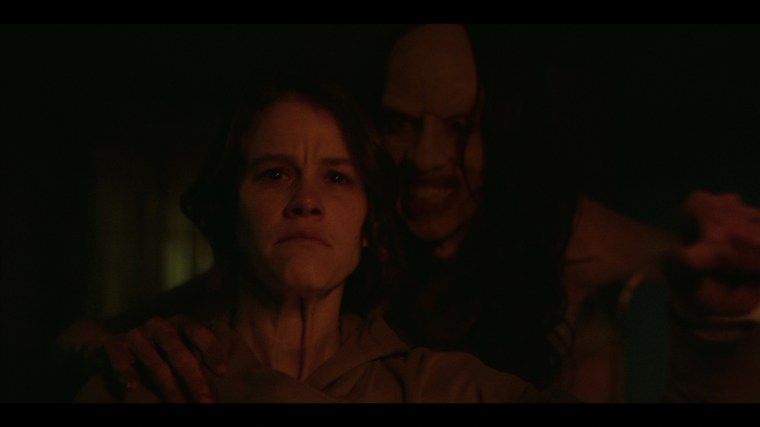



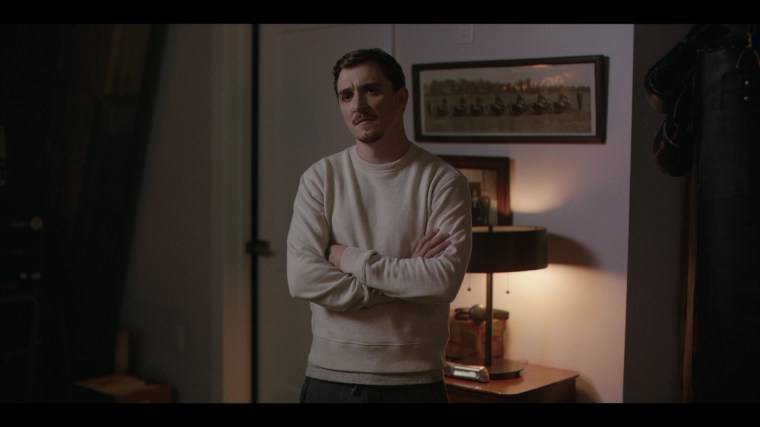


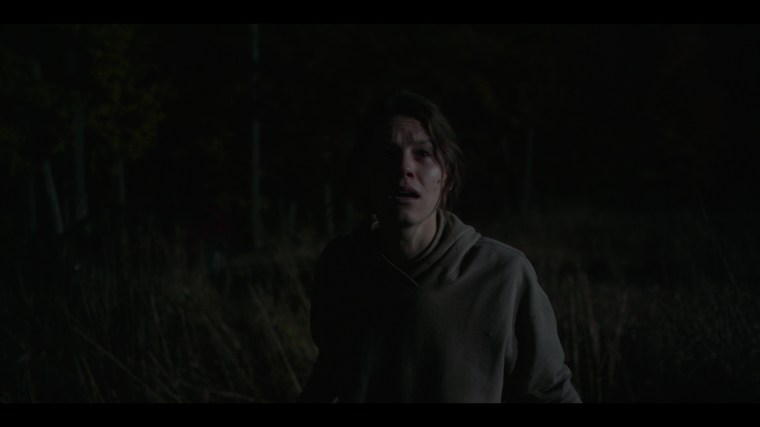
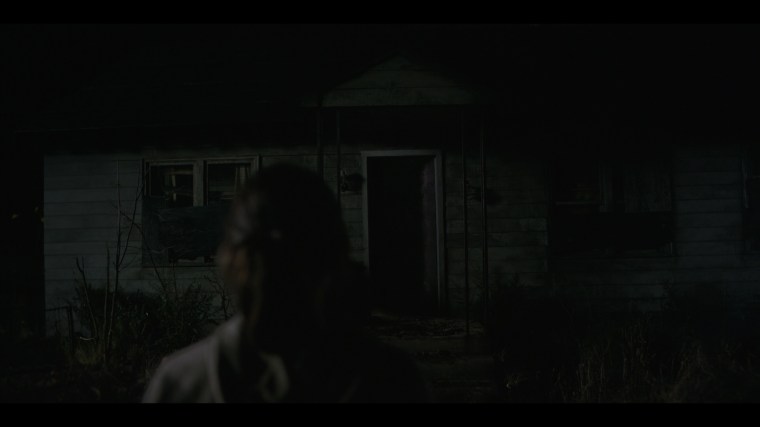

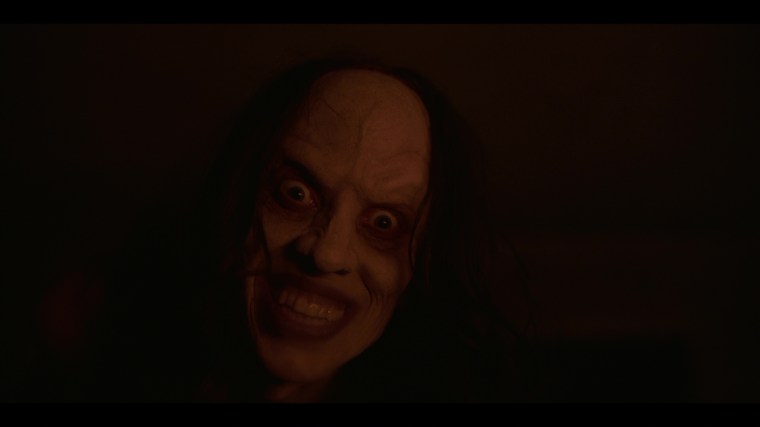





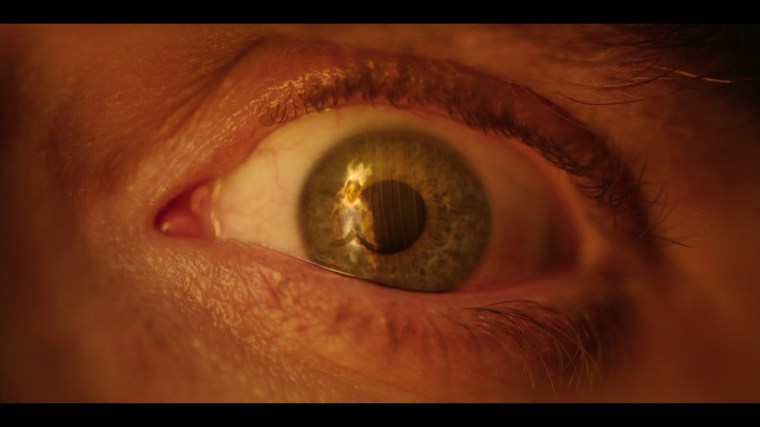

The Scene: Shortly before Bacon’s therapist acquires the trauma curse, there’s a “oner” that begins with a bird eye’s view of an ambulance arriving at the hospital before the camera continues to the office of Bacon’s boss.
“I wanted to create a sense of a real ominous feeling that something omniscient was coming for Rose…There’s a lot of shots in this film that were designed to feel really omniscient and foreboding. I wanted the camera to have almost an intelligence to it almost as if it’s the entity itself and was inviting the audience to participate in the evil that is stalking Rose.” – Director Parker Finn (2)
Here’s DP Charlie Sarroff on the shot…
“That ended up being a drone shot with a VFX stitch to a Technocrane shot through an exterior building facade we built on stage. The camera then pushes through the window into the office, and [we] just stitch it to the office shot. The drone shot took quite a bit of choreography with the ambulance driver, the EMS guys, and Laura [Caitlin Stasey] screaming on the stretcher. That was a real hospital in New Jersey. When the camera tilts up to the office and we stitch to the crane shot, we push inside (the window glass was put back in post). When Rose knocks on the door, we pan around to the left. That was a really fun shot to map out.” – Charlie Sarroff (3)
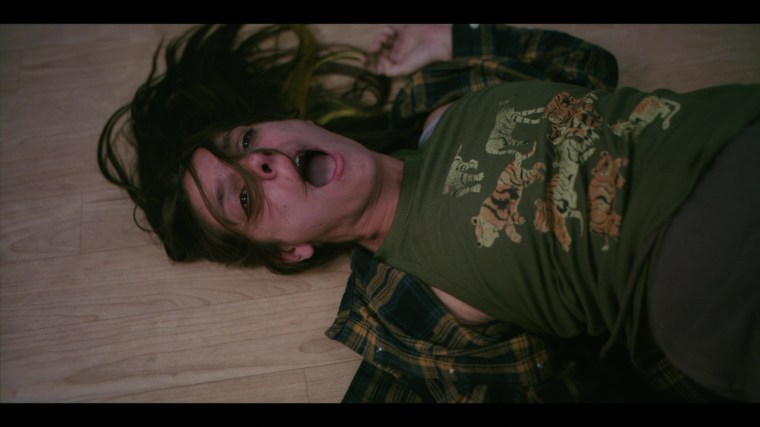
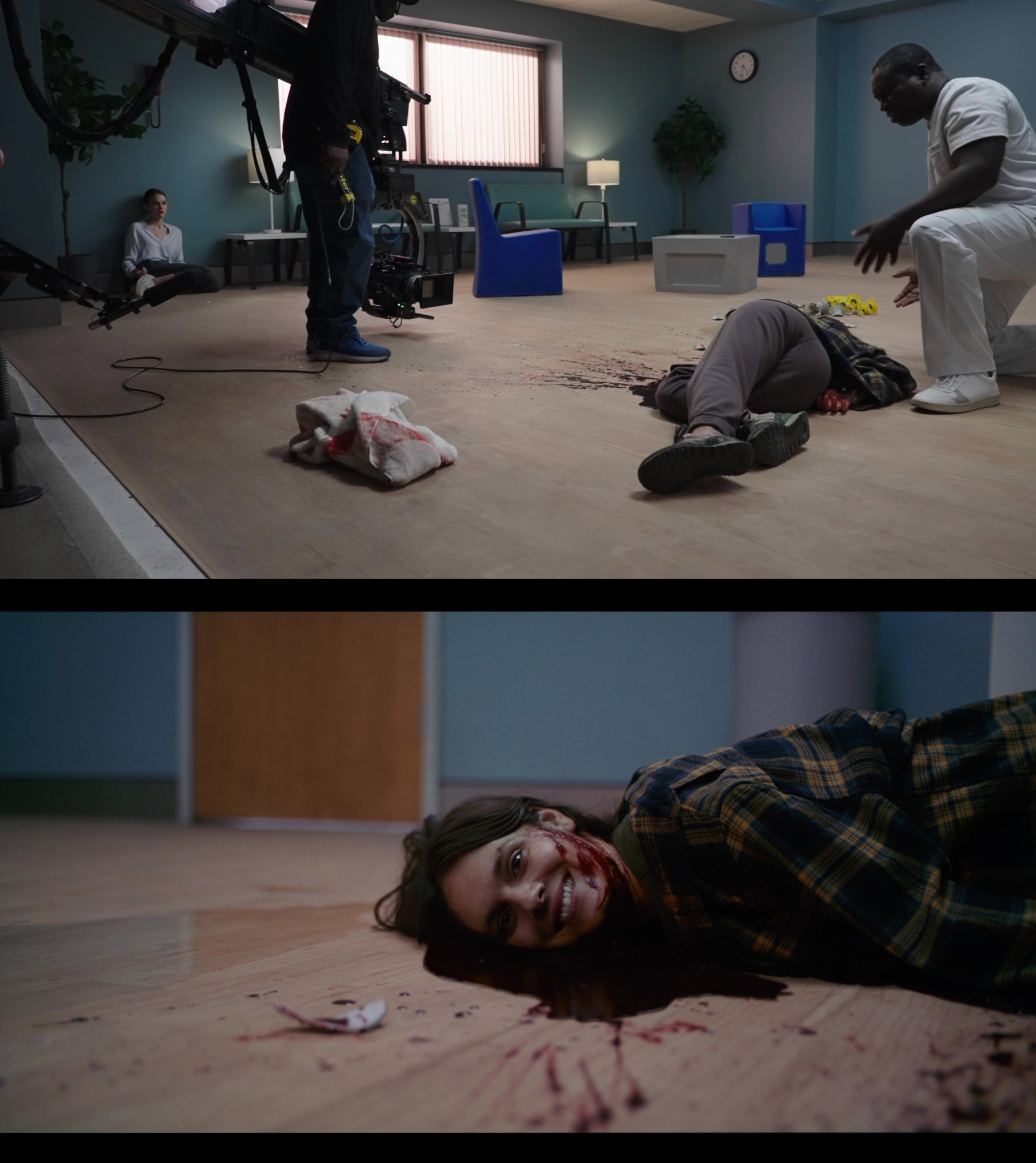
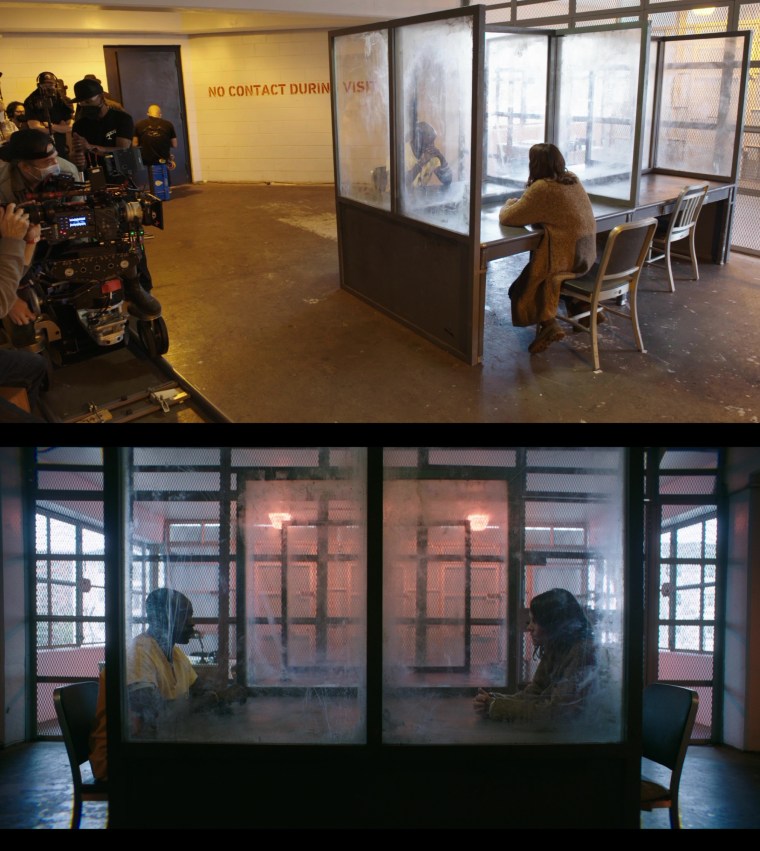
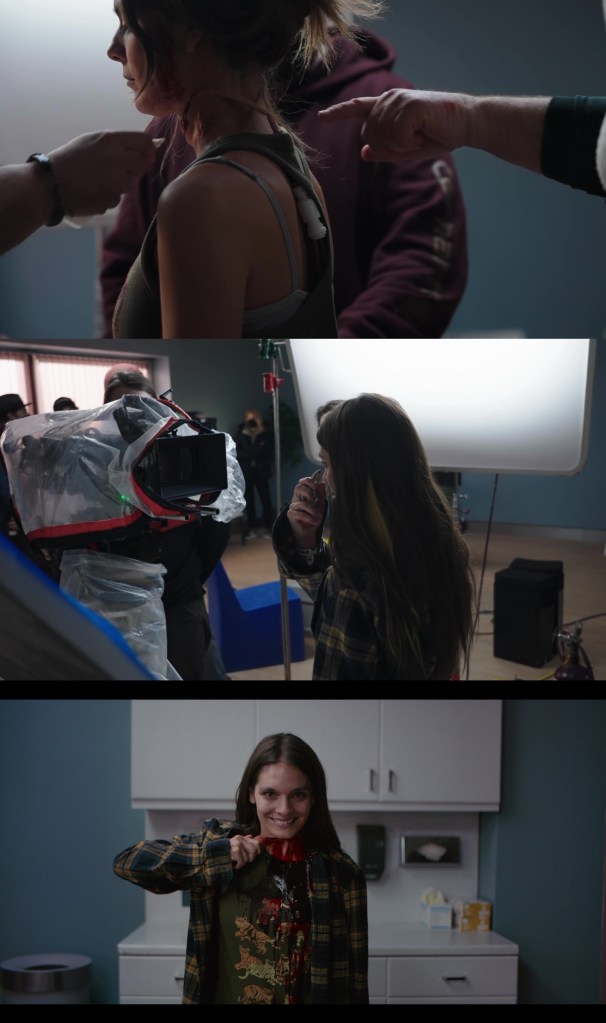
The Scene: Rose’s patient Laura (Caitlin Stasey) cuts her own throat with a shard from a broken vase.
“I wanted to create the sensation here – and I think it especially will ring true on a second watch – that this is the moment where the curse is being transferred from Laura to Rose…We had one day to shoot this scene, so it meant that we had to be incredibly prepped for it. It’s actually the longest scene in the film and it’s incredibly complex both performance wise and on a technical level. Basically what I told Caitlin (Stasey) here is that there is no way to go too big with this moment and she knocked it absolutely out of the park.” – Director Parker Finn (2)


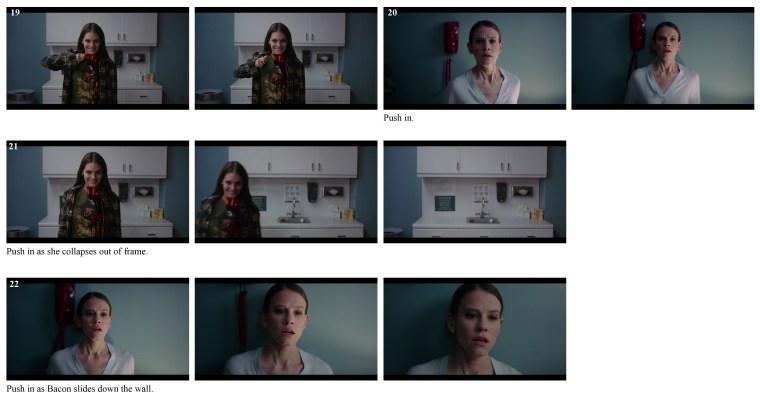
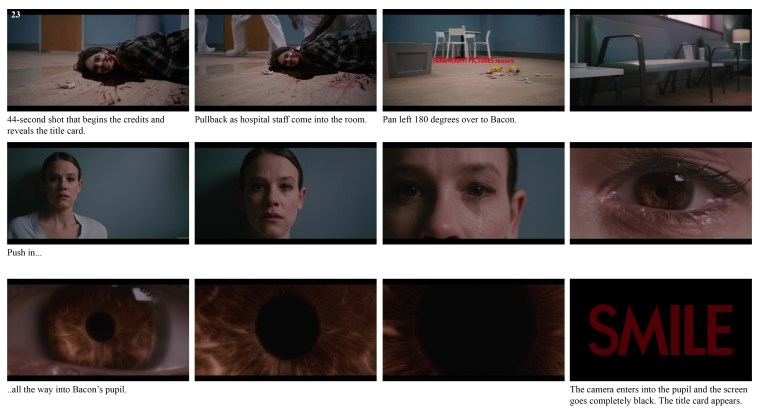
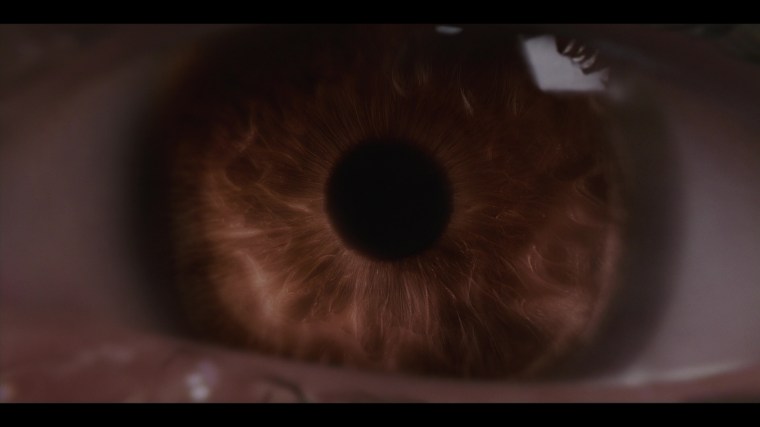
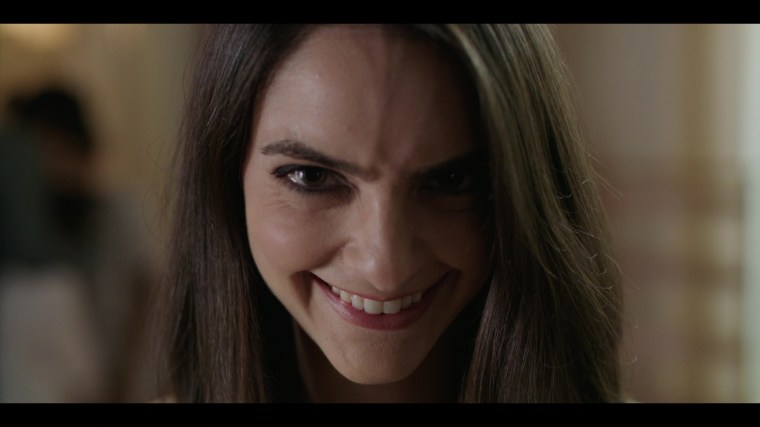
Here’s Finn on the final shot of the sequence, which pushes all the way into Bacon’s pupil to lead into a flashing title card almost 14 minutes into the movie…
“I personally love a delayed title drop in a film and it felt like a perfect opportunity to pull one of those off. This was another very complex shot that took a lot of preplanning in order to pull off to create something that feels as hopefully seamless as this does…The initial version (of the flashing title card) we had landed on, at the very last minute we discovered it failed the Harding test, which means that basically it could trigger people that are photosensitive and may suffer from seizures, which of course is no good. So we had to recalibrate that shot several times until we could get it to pass the test and I’m very pleased with the end result. It creates a real physical reaction in my mind.” (2)
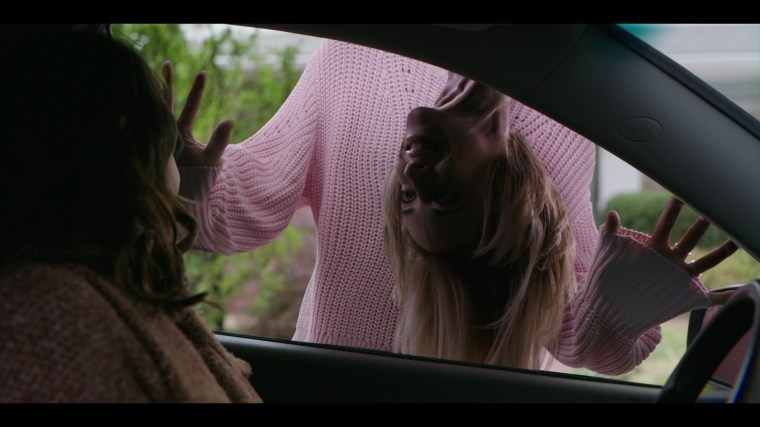
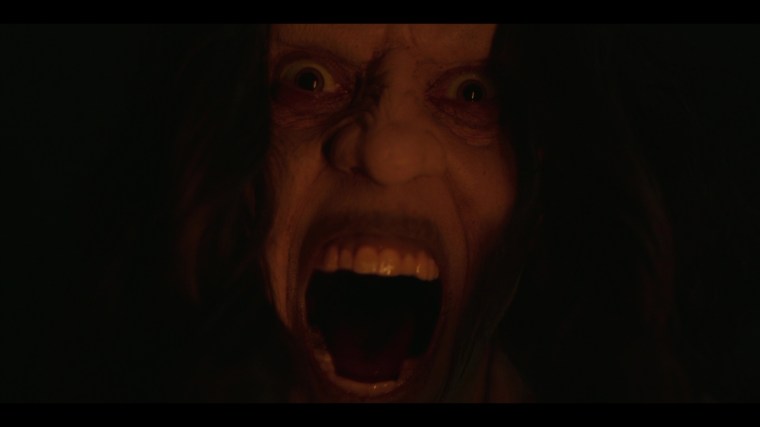
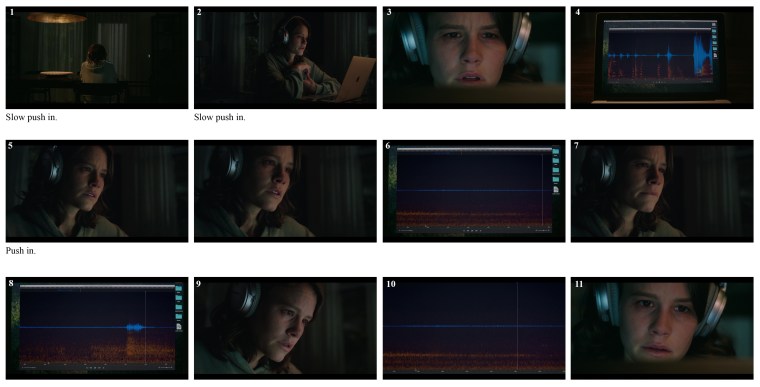
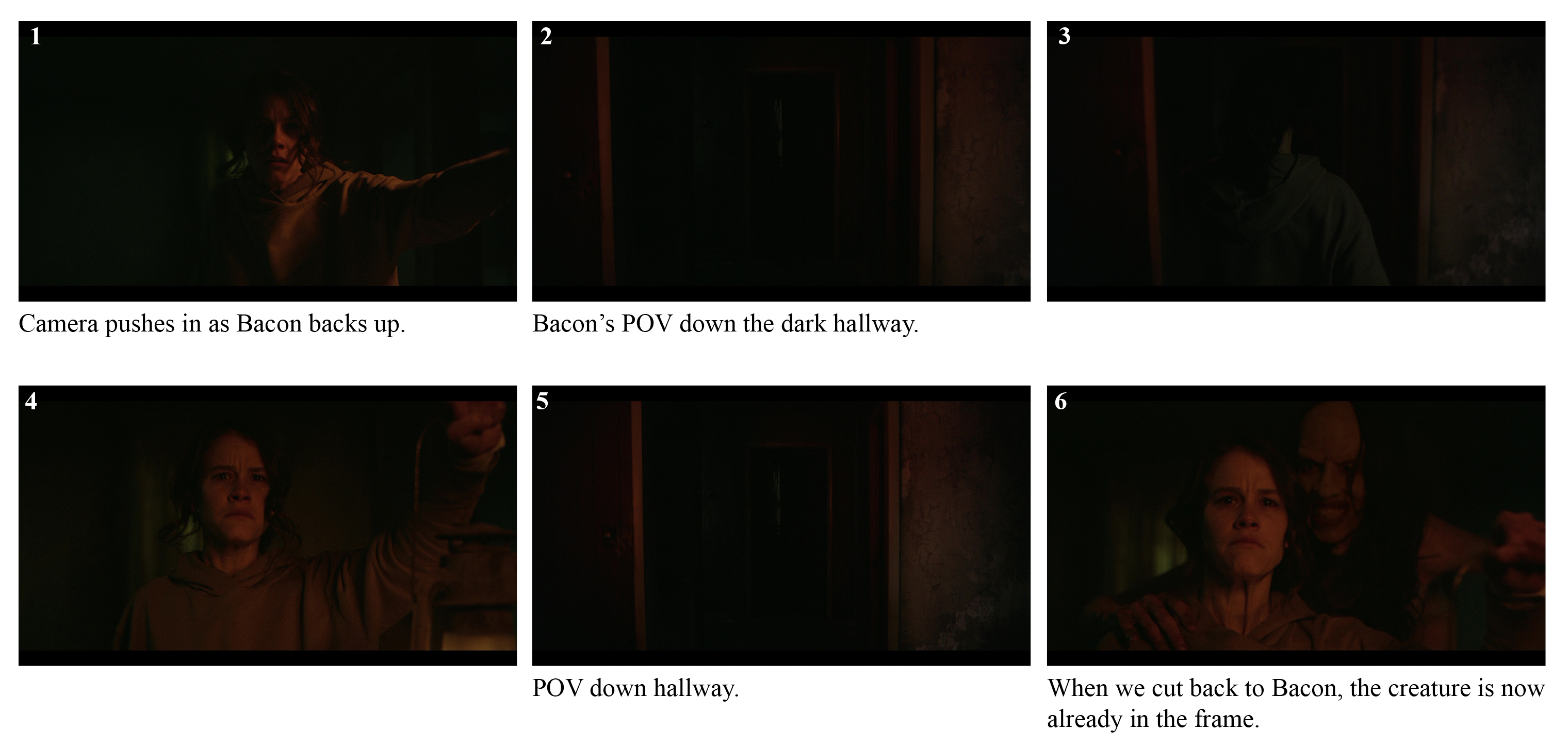
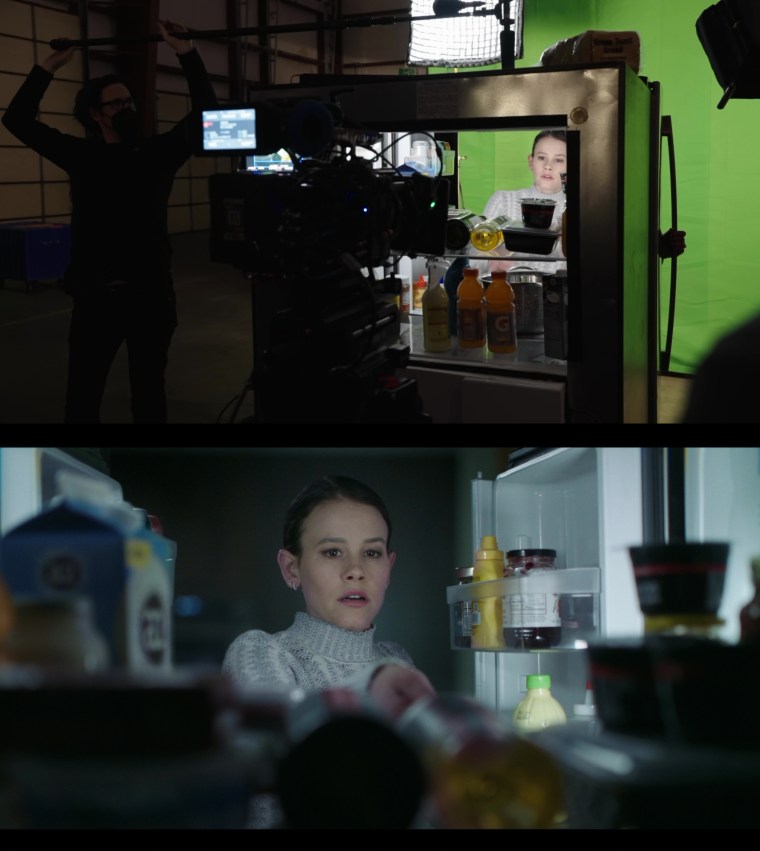
Horror jump scares often come from something invading the frame accompanied by a sound sting to spook us and part of the fun of horror films is anticipating where those violations of the frame will come from. In Smile, the jump often comes on the edit – meaning the monster is already in the frame as soon as the movie cuts to a new shot, making it harder for the audience to foresee the scare. You’ll find a few examples below.
Here’s director Parker Finn….
“I’ve always appreciated a well-executed jump scare. I think a lot of times people talk about jump scares with too broad of a brushstroke. Saying ‘I don’t like jump scares’ is like saying ‘I don’t like music with guitars.’ When I set out to do Smile, I wanted the jump scares thematically to be matching what is going on in the movie. So, this thing that comes into Rose’s life, the Smile, its whole design is to traumatize her over and over again and lower all of her defenses. I wanted the audience to be experiencing that right along with Rose. The jump scares that are happening to Rose are also supposed to be breaking the audience down and getting them to this place where I can do the ending that I am going for.” (5)
Below – Rose listens to the audio recording of the last session with her deceased patient.

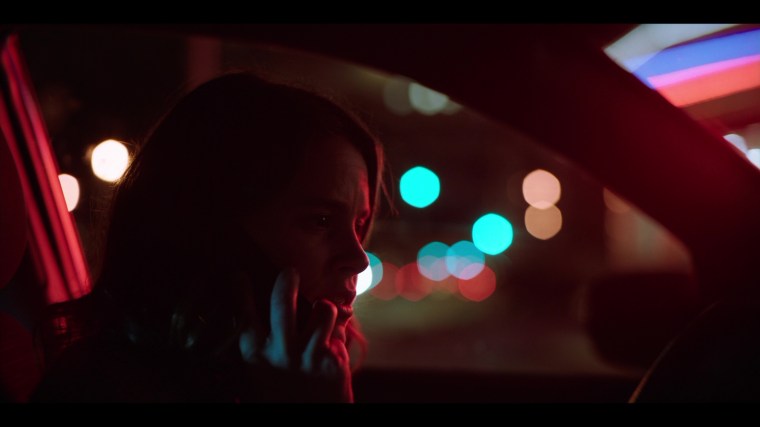
Below – Rose gets spooked in her car.

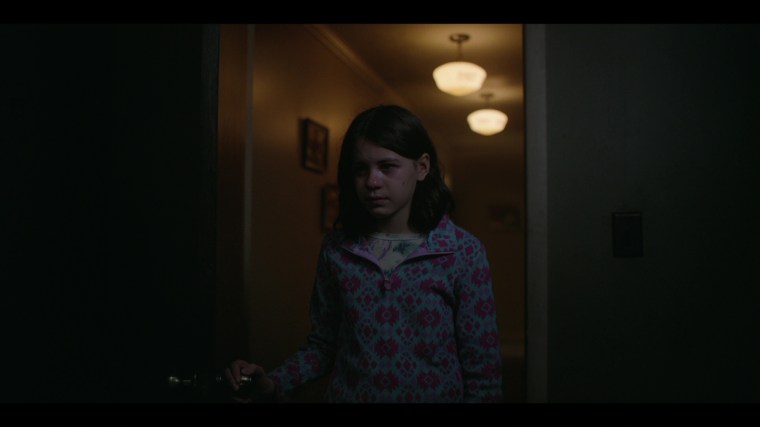
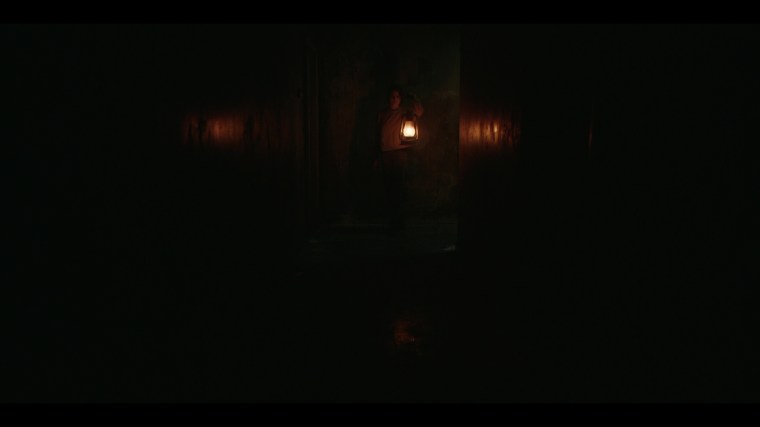
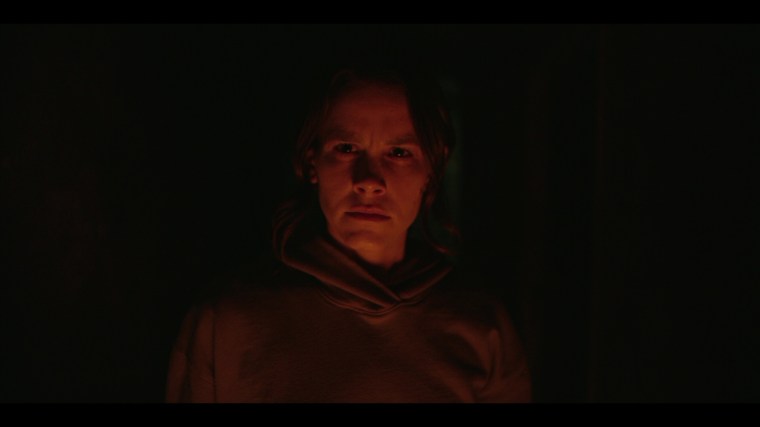
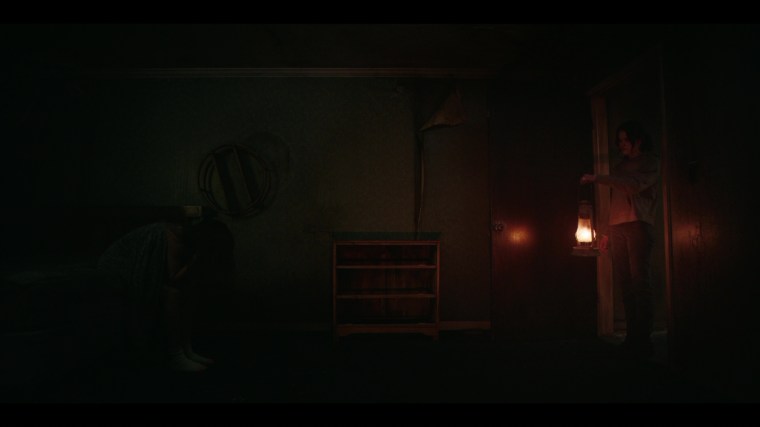
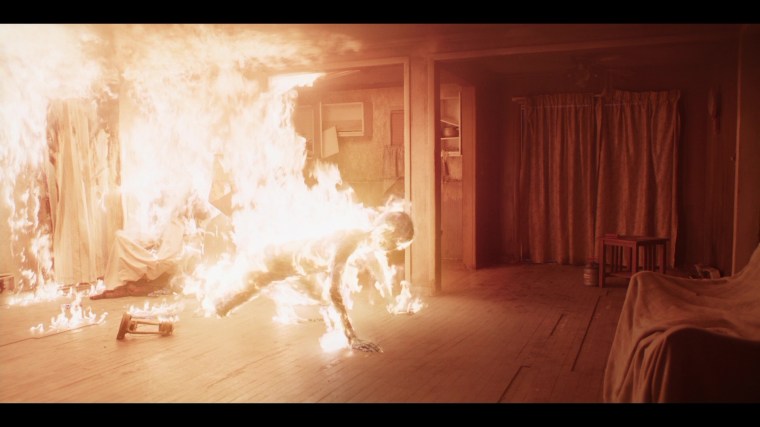
Below – A jump scare in the film’s finale, set at Rose’s childhood home.
Below – An exception to the previous examples, here the scare comes in a long take with an invasion of the frame outside the house of Rose’s sister.

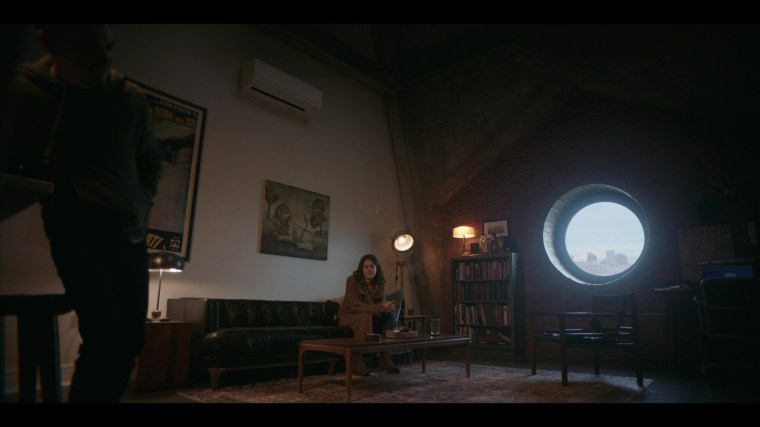
A push-in to a porthole window transitions the location from cop Kyle Gallner’s apartment to an isolated stretch of road.

Transition into flashback in Rose’s childhood bedroom.

Director Parker Finn on Smile’s shift from streaming to theaters…
“We were green lit, budgeted and scheduled to be a Paramount+ film, and I was so excited about the opportunity to get to make a movie with a studio as a first-time filmmaker. I was given a really healthy amount of resources for my first film, and we set out to make the best movie we could. And then we got to that first test screening, which was about 12 or 13 weeks into post, and they always warn you ahead of time that horror routinely scores lower than other genres. And horror films that have the mean tone that Smile has score even lower than that, so they were prepared to look at it through that lens.
And at that first test screening, there was no [existing] marketing or knowledge of what the movie was. It was a 270-person, sold-out screening in Burbank, and when the movie started playing, you could feel the electricity in the air. The audience was screaming at the screen, so it was very clear that the communal environment and nature of it was incredible. And to Paramount’s credit, they recognized that, and they got behind the film in such an amazing way by creating this wonderful marketing campaign. They really threw all their support behind it, and it’s beyond surreal to see what the movie has done.” (4)
Finn on not revealing the origin of the curse in the story…
“I think that things that can’t be easily defined, the unknown, are always the scariest. One of the hallmarks of the arena that Smile is playing in tends to get really specific with that stuff and I, from the beginning, was like, absolutely not. I want to do something where we don’t give it a name, we don’t give it an origin, but I wanted to make sure people understood how it was operating. I find that exposition on that kind of stuff always defangs it a little bit. When I first turned in that draft, there was definitely a question from the studio of, “We need to know where this thing came from.” That was a hill that I was willing to die on because for me that was really important.” (5)
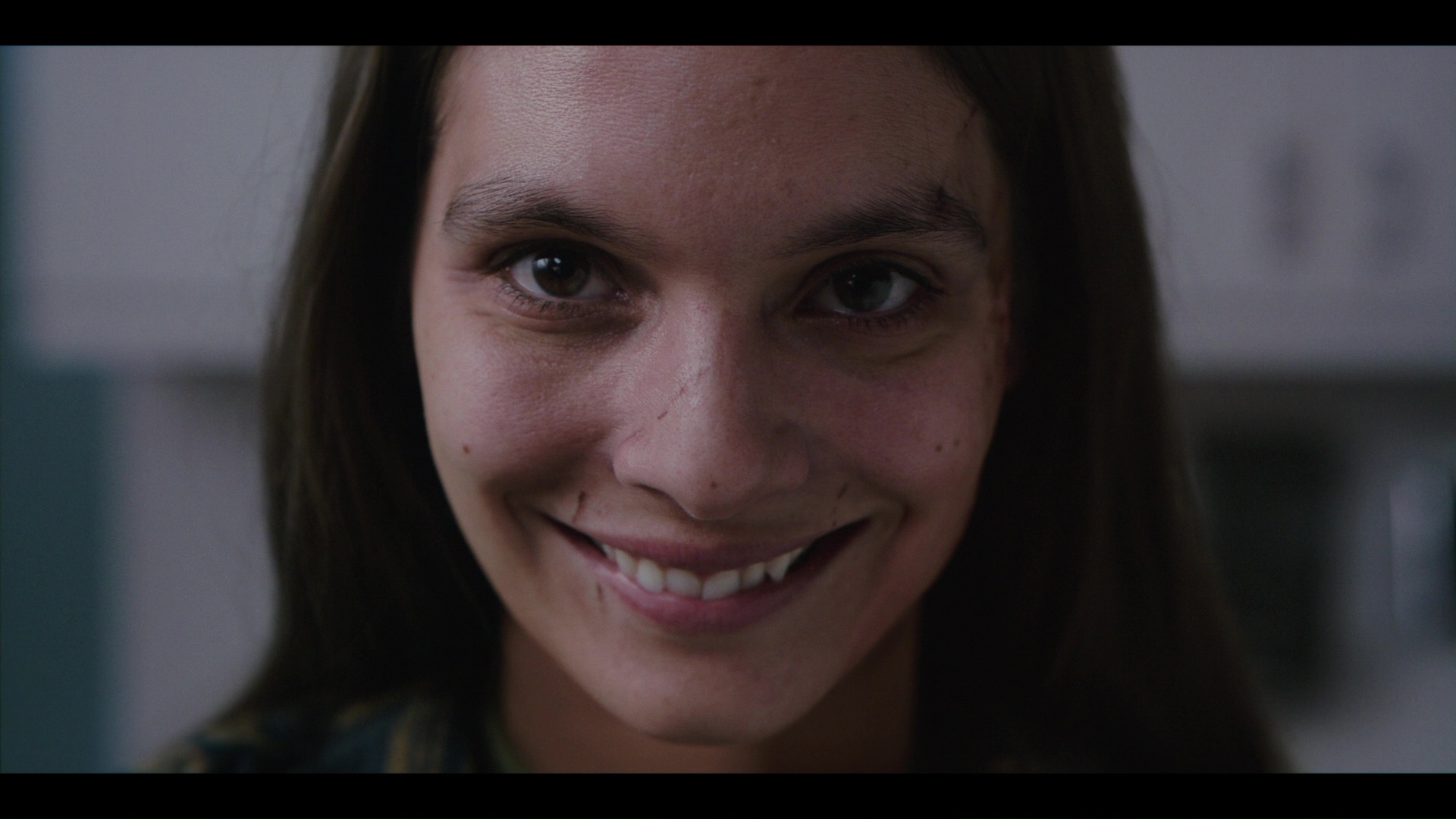
Finn on the film’s distinctive evil smiles…
“The smile definitely hooked me from the very beginning. I love that inherent contradiction that exists within it. Smiles are obviously designed to be a friendly gesture, something warm. It’s what we associate with them, but, in reality, I think we also use smiles every day to mask what we’re really feeling, and that was definitely something that was a motif that was running through the film, and I wanted to see if I could take that and turn it on [its] head and let the evil in the film wear a smile as a mask to create the promise of a threat or something dangerous, something menacing and see if audiences might get freaked out by that.” (6)
Finn on his writing process…
“I have to know what my end is before I start writing. That is usually a litmus test for me. I do a lot of notes and journaling about the idea for a long time beforehand. For me to open Final Draft and start writing means I have a pretty clear destination of what I’m doing…With Smile, especially with the structure of both Rose’s personal journey and the high concept within it, I always knew there was going to be a cyclical nature to how I was gonna get from the beginning to the end. And then in the process of writing, you end up throwing out a lot of things because while you’re in it things start speaking to me. I write very instinctually once I have the plan, sometimes that means going against the plan. [But] going against the plan for me is (only) possible once I already sort of have the plan…I learn something from every new thing that I write. I hope to come out the other side a better writer, more informed about my own process, which is a constantly evolving thing. But with each project, I take the thing that worked from it and I’ll carry that forth with me and all the stuff that was either frictional or difficult, I’ll leave that behind for the next project. When I’m getting ready to start writing something, I always have these cornerstone images or, like, moments that are really distilling the whole movie into certain images or moments that are gonna happen inside the movie. Oftentimes, those remain intact from before I started writing to the finished product and they really inform me about what the movie is and how everything should feel. They end up being some of my favorite moments” (5)
Cinematographer Charlie Sarroff on some of Smile’s aesthetic rules, including not using over-the-shoulder shots with Rose to make her feel more isolated…
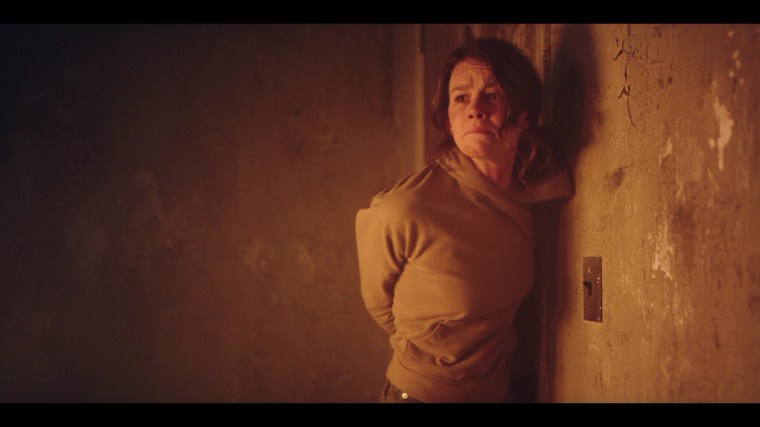
“We didn’t want her to be connected to anybody – or anyone in the film to really be connected to one another, for that matter. We wanted everyone to be on their own journey, especially Rose, so if you look at all her close-ups there’s no-one (else in the shot). Unless she goes to [her ex-boyfriend] Joe’s apartment and they’re sitting on the couch, but we opened up the aperture (for that) so the depth of field was so, so tiny that they still feel isolated…I’m a big fan of using your aperture and lenses as a uniformed way of developing language and then when you change that up, for whatever reason, it has more of an impact. I liked the idea of us only using a few different prime lenses for, say, 90% of the film, but then, when we went to a zoom or a longer telephoto lens, I feel it has a stronger impact, rather than being on all different lenses for different sizes (throughout the film).” (7)
Sarroff on shooting with the Alexa 65 and Arri DNA Lenses…
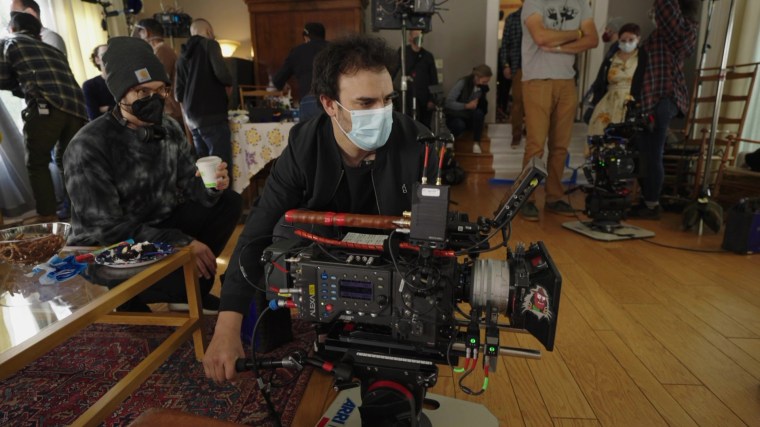
“We shot on the Alexa 65, though we used the Alexa LF Mini as a B-camera here and there and when on Steadicam. We wanted to be up close and personal in Rose’s world and really feel her anxiety. We also wanted to create this feeling of the audience being able to see quite a lot around her. We wanted viewers to feel that depth, feel that something could be jumping out at any moment. The Alexa 65 was used on large-scale, epic films like The Revenant. The selling point for us was that we could shoot on extremely wide lenses with minimal distortion. With a smaller format camera, people’s faces become unrealistic, even ghoulish, when in close on wide lenses. But with the 65, we could use a 28mm lens with very little warping and end up with about the same field of view as a 14mm on a Super 35 format camera. We used primarily Arri DNA lenses — vintage glass that has been repackaged. Parker and I don’t like the cleanest images. We didn’t want modern, crisp glass. We found the DNAs were kind on skin tones and had a lot of character, [but] they were a bit inconsistent, and it was hard to find a matching set. We’d change lenses and one would have a slightly green hue, another a slightly warm hue. Our awesome DIT, Nate Spivey, really helped balance that out.” (3)
Sarroff on Smile’s 2:1 aspect ratio…
“Parker and I are both fans of anamorphic and Scope. Relic was spherical with a 2.39 crop, and I’m really comfortable with that format. But we both decided that 2:1 was a good, happy medium that just worked for Smile. Parker was particularly fond of the aspect ratio and was the first to suggest testing it. With the sets we were filming and the compositions we went for, we thought the film would benefit [from] a little bit more height in the frame. We didn’t necessarily think people would be watching on laptops. Although that did come into play, I’m not going to lie. We thought, ‘If this is (intended for a) streamer, maybe we should have a little more real estate on the screen.’ But we honestly really love the aspect ratio. A lot of recent films have embraced it, like Ari Aster‘s Hereditary and Midsommar. We did some tests and got approval from the studio. To a degree, it suits television, but even if (we had known it) was going straight to theaters, [there’s] a very good chance we would have still landed on that aspect ratio.” (3)
Sarroff on the film’s references, which include horror staples such as Rosemary’s Baby, The Shining and The Ring but also the work of Todd Haynes…
“We (looked at) a combination of film, TV, and artwork. For honing in on the Alexa 65, we looked at the great photographer Gregory Crewdson. He does this surreal, cinematic imagery. He plays with images on top of each other to create extreme depth. He plays with color temperatures and balances. There’s a series shot in houses with female characters in living room settings that we really responded to. Parker said one of his favorite directors was Todd Haynes, who’s not really thought of as [a] horror [director], although some of his work does lean that way. When I was putting together a mood board I included Safe, Todd’s film from 1995. We really liked the Servant series, especially the camera by Mike Gioulakis (It Follows). A film called Possession, with Isabelle Adjani and Sam Neill, was definitely a reference, especially in the way the camera moves.” (3)
Director Parker Finn on the third act monster reveal…

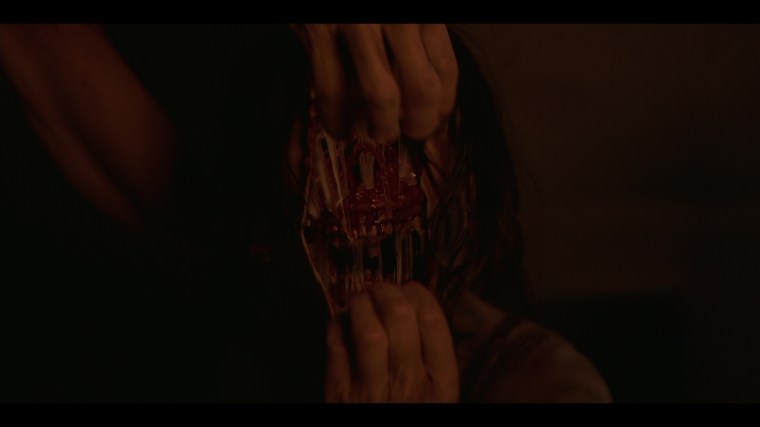
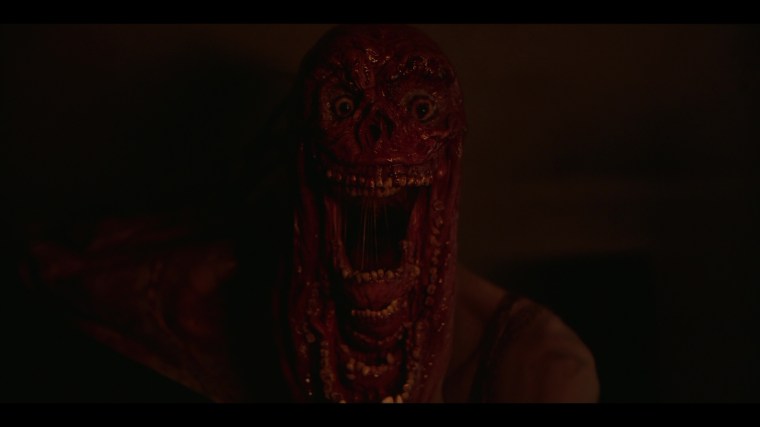
“What I was always interested in about Smile was the fact that, despite the supernatural goings on in it, I feel like hopefully no one is anticipating that there is gonna be this big giant monster at the end. It’s this hard left turn. So, that was always kind of a goalpost, and I really wanted to do it practically. I love practical effects, I grew up on them. That was something I was extremely adamant about. When Rose’s mom shifts into this nightmarish version of herself, the idea there was reducing Rose back to her 10-year-old self when her mother felt sort of like a monster…(The creature) is (played by) a man. He’s got some prosthetics on him, but he’s like 6-foot-5. The trick to that first moment, that reveal, is that we built a smaller version of that hallway, which involved a bunch of platforming beyond that. There’s a minimal amount of prosthetics, but I met with a bunch of creature body performers and he had the right look to start with.” (5)

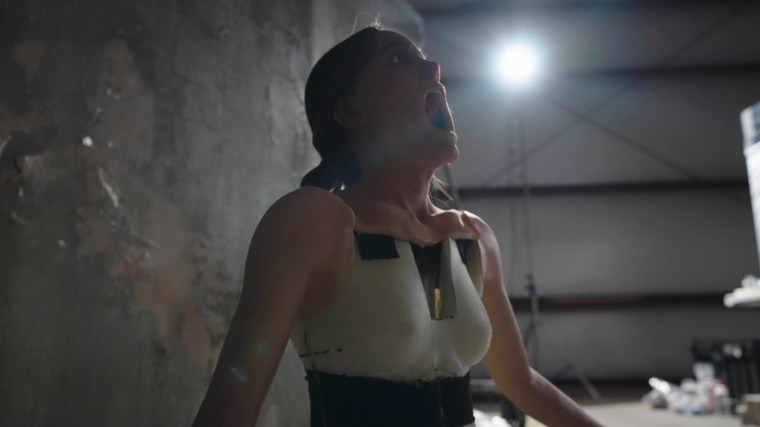
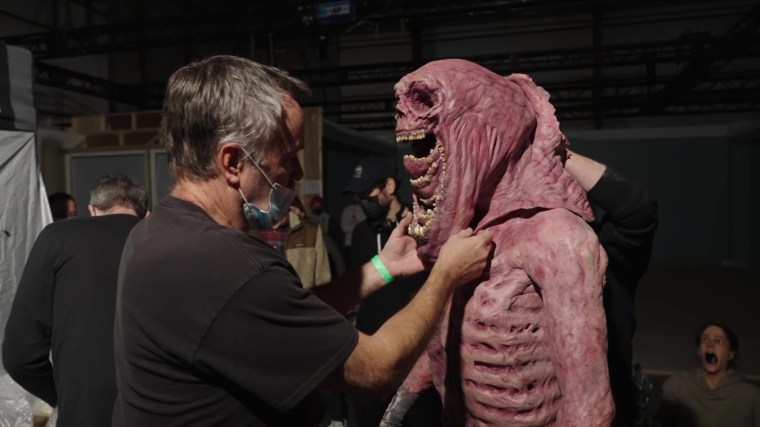
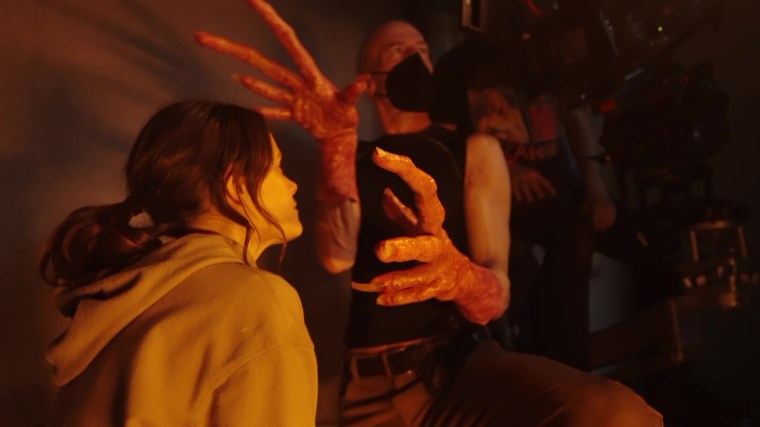


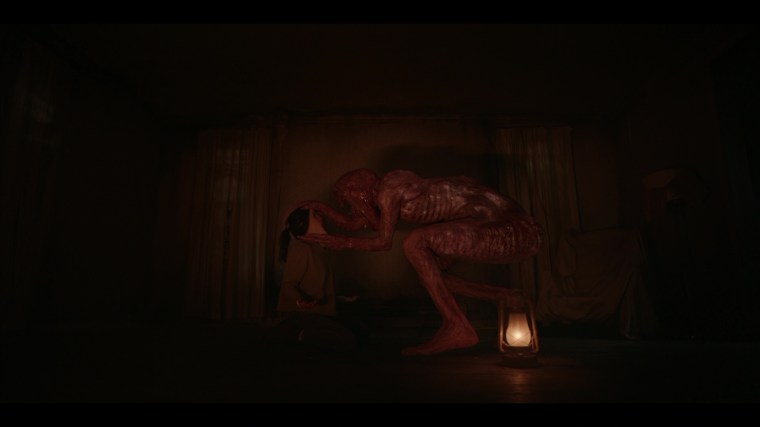
“With the final creature, I had written into the script exactly what it is and does at the very end. I wanted to show it, but I wanted to be incredibly restrained with how much we see it and how long we see it [for]. I had drawn a really rudimentary version of that final wide tableau that we see it in and I wanted it to almost feel like a romantic or baroque painting. Then I worked with a concept artist to take my little shitty drawing and turn it into a piece of art. We had some other concept art around then we passed that along to StudioADI, Tom Woodruff, Jr. and Alec Gillis. Those guys are legends to me. They worked with Stan Winston to build the Alien queen in Aliens. They did Pumpkinhead. Once I had convinced the studio to let me do it practically, we needed all that runway. So, honestly, that monster was the last thing we shot and we had to figure out how all that was gonna work. There was a little bit of engineering because we had to create a fake Rose also to be able to open its mouth that way. To go all the way through (the shoot and then have the monster sequence) either be the second-to-last or last day of production was really a full circle (moment). It was one of those moments you don’t get to see on set that often, where the whole crew was gathered around looking at this big giant monster doing its thing. It was a lot of fun to get to make what felt like classic movie magic. (5)
Sarroff on lighting the finale at Rose’s childhood home…
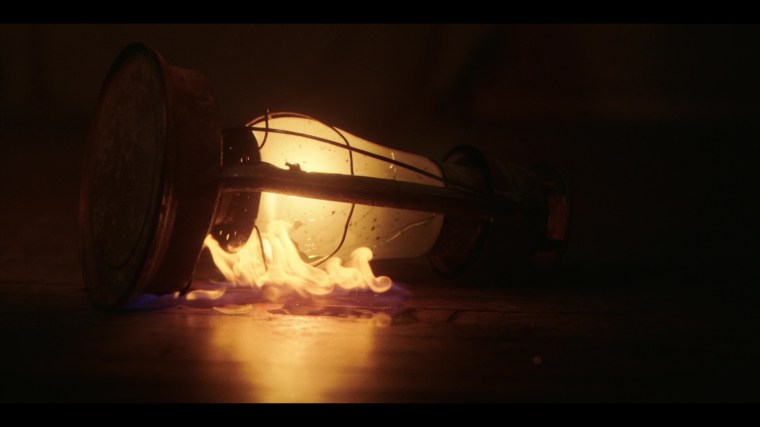
“The scenes mostly play out there during the nighttime and the set interior was built on a stage, so we had quite a lot of flexibility. We created some soft ambient moonlight, mainly playing through the windows, and to help give the room an underexposed base level of light we would bounce Astera tubes that matched our moonlight HMI/Gel combination into the ceiling. The rest of the scene’s lighting is mostly motivated off the old kerosene lantern that Rose uses or the flashlight that Joel (played by Kyle Gallner) brings in. To get more of an exposure in the areas of the frame that we wanted the audience to see, (our chief lighting technical) Joel Minnich would walk around next to Rose and hold a flickering fire Astera tube in the different areas where Rose aimed the lantern. It was a bit to choreograph but he did a great job.” (7)
Finn on the film’s bleak conclusion…
“From very early on when I was developing the script, I felt a very strong draw towards allowing the film to find its worst logical conclusion. It felt right for the story that I was telling, and I was hoping it would feel earned. So I knew from an early point that we were always heading to the destination that we eventually got to, but how we were going to get there changed a few times along the course. I wanted to do the thing that the audience didn’t want to happen, but it was also important to me to be able to reach an emotional catharsis before we take that very dark turn. So I was kind of hoping to have my cake and eat it, too.” (4)
Finn on choosing Chilean-born composer Cristobal Tapia de Veer – who employed a unique instrument called a Daxophone – to score Smile…
”When Smile got greenlit, we had the opportunity to start talking about who we were going to send the script to, as far as other collaborators were concerned, and when I met with Paramount’s music department, they had a few composers in mind. I said ‘Listen, those are all very talented people, but I have a list of composers I want to send the script to’ – and I had them in order, so if someone passes on the film, we know who to move on to. But at the very top of the list was Cristo. We sent him the script, he read it over a weekend, then we hopped on a Zoom and right away he was like ‘I love this script, I really want to do this’..His process is really interesting. He collects instruments, he modifies them, he builds them – everything he does is by hand. He records all the sounds analogue, then brings them all into his computer to start composing with them. He had sent me this video of him creating these sounds, then videos of him mixing them together, so I was getting this whilst on production, and listening to it and sharing it with my editor. By the time I got back to Los Angeles and we got into the edit, our first early cut had 50% of music he had written – just based off of the script.” (8)




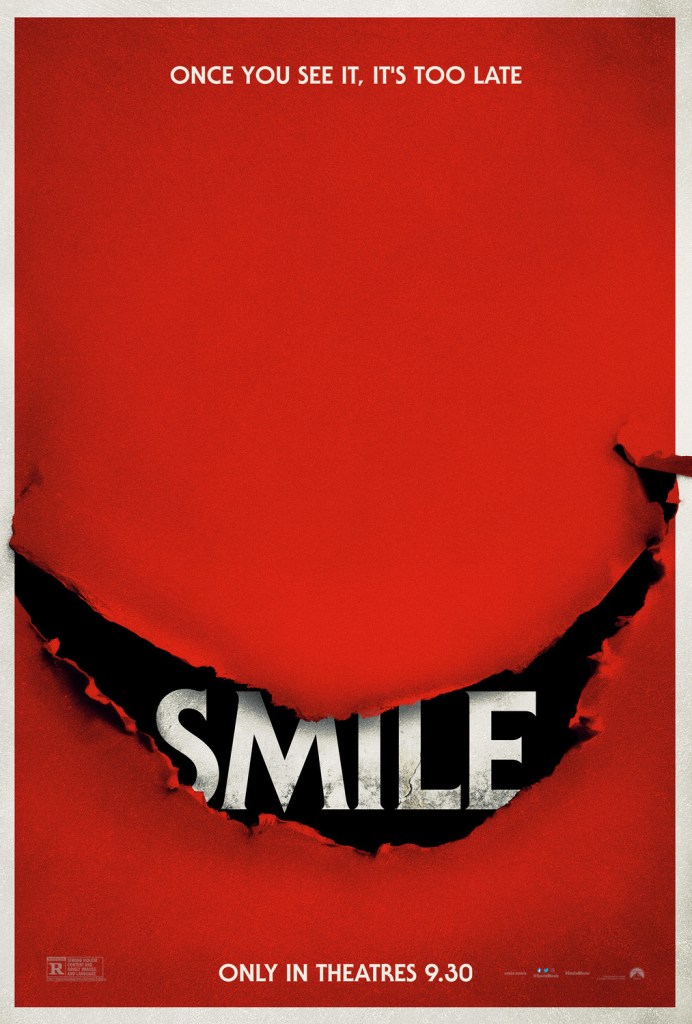
Posters


Sources
1) Blu-ray Featurettes
2) Parker Finn Blu-ray Commentary Track
3) Below the Line interview with Charlie Sarroff
4) Hollywood Reporter interview with Parker Finn
5) GQ interview with Parker Finn and Barbarian director Zach Cregger
6) Collider interview with Parker Finn
7) British cinematographer interview with Charlie Sarroff
8) Spitfire Audio interview with Parker Finn about the film’s score


 deep fried movies