“(Ripley director Steven Zaillian) didn’t want sunlight…he didn’t want the postcard version of Italy, the beautiful travelogue with sunlit water and beautiful colors. He didn’t want any of that. He wanted a noir-ish black and white with wet streets and dark shadows.”
I definitely checked off a bucket list interview with this Filmmaker Magazine piece on Robert Elswit about his Emmy-nominated work on Ripley, which combines the influences of 1920s German Expressionism, 1940s Hollywood noir and 1960s Italian cinema. An Oscar winner for There Will Be Blood, Elswit’s storied career includes a half dozen Paul Thomas Anderson collaborations, a couple of Mission: Impossibles and films like Good Night and Good Luck, The Town, Michael Clayton and Nightcrawler. Below are a few excerpts from my interview or you can check out the full story here.
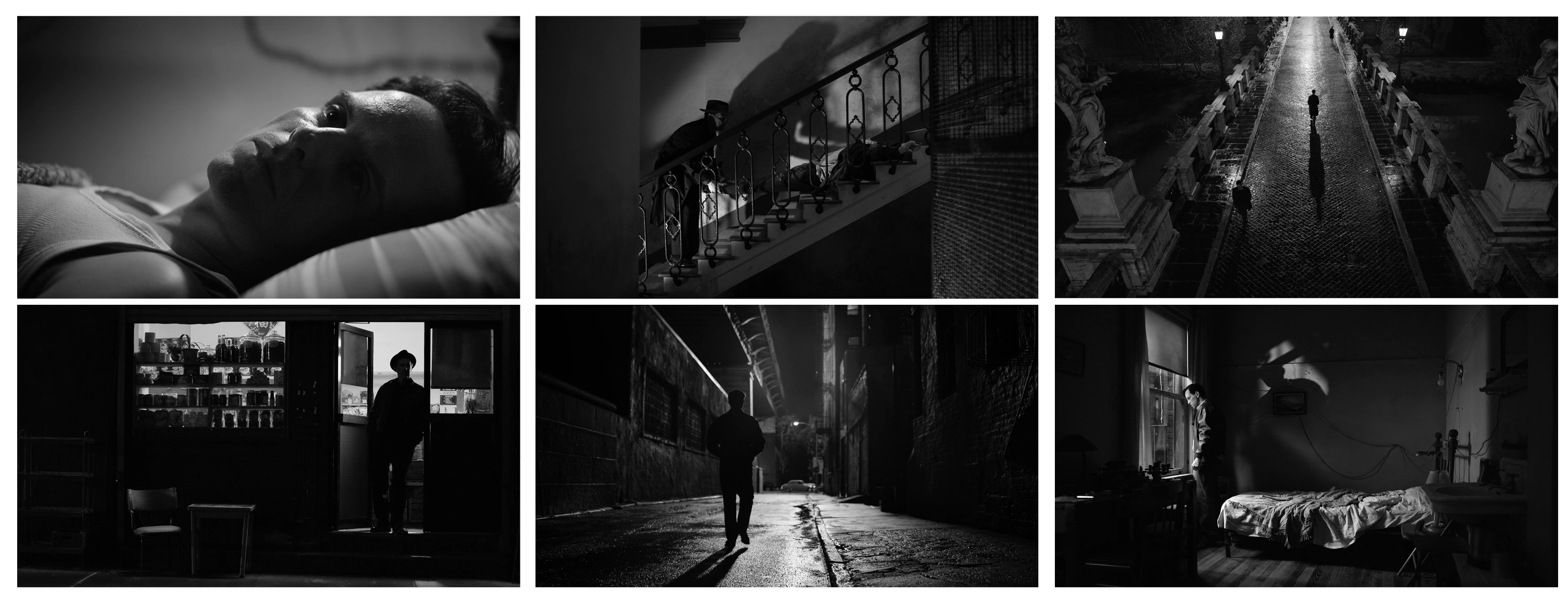
On shooting in black and white…
Filmmaker: How early did you decide on black and white?
Elswit: Steven said black and white to me at the very beginning. He really wanted to do the kind of exaggerated contrast that exists in the color paintings of Caravaggio. He wanted your eye to be directed by where the light strikes and where it doesn’t, and that’s something you can do in a very dramatic way with black and white. You can create a reality that’s very theatrical and stylized. Steven had a very specific and clear idea of the kind of pictorial style he wanted. He is one of those directors who knows that the lighting has a direct connection to the feelings of an audience. He didn’t want sunlight. I’m sure he’s said this a million times, but he didn’t want the postcard version of Italy, the beautiful travelogue with sunlit water and beautiful colors. He didn’t want any of that. He wanted a noir-ish black and white with wet streets and dark shadows.
Filmmaker: How did you achieve that desired contrast?
Elswit: The way you set it up now is you have a digital monitor on set that’s tuned to accurately reflect what is being captured on the sensor, then you create a LUT. There are some old film stocks I love and at the post production house in Los Angeles, Company 3, I created a black and white LUT that to my eye imitated two stocks. One was 5231, a Kodak stock that was very slow that they don’t make anymore. It had wonderful contrast and very little gray. You could really see the shadows, but it gave you beautiful highlights as well. I added to that some of the characteristics of Ferrania P30, which was the stock that a lot of the classic films in Italy in the 1960s were shot with. It’s now been revived as stills film. So, that LUT was on the monitor and that’s what I lit to. I could always go into LOG and look at the flat image to make sure I wasn’t losing highlights and to where the shadows were falling, because LOG gives you the whole flat image that’s being put on the sensor without any contrast at all. So, you can just push a button and see that.
I had a wonderful DIT in Italy, Marco Coradin, who was just the best. I was worried that I wasn’t going to be able to time the show at the end, because you never know how long post might go on. The post for the last thing I did with Steven, The Night Of, ended up being a year and a half. So, on Ripley, I looked at dailies pretty carefully when they came in. I’d put them up on the monitor in the DIT tent, and if I wanted to make a change we’d adjust things so that essentially we had what the movie was going to look like. We really timed the show as we went, which is so much simpler to do if you don’t have color—all you’re dealing with is highlight and shadow detail and contrast.
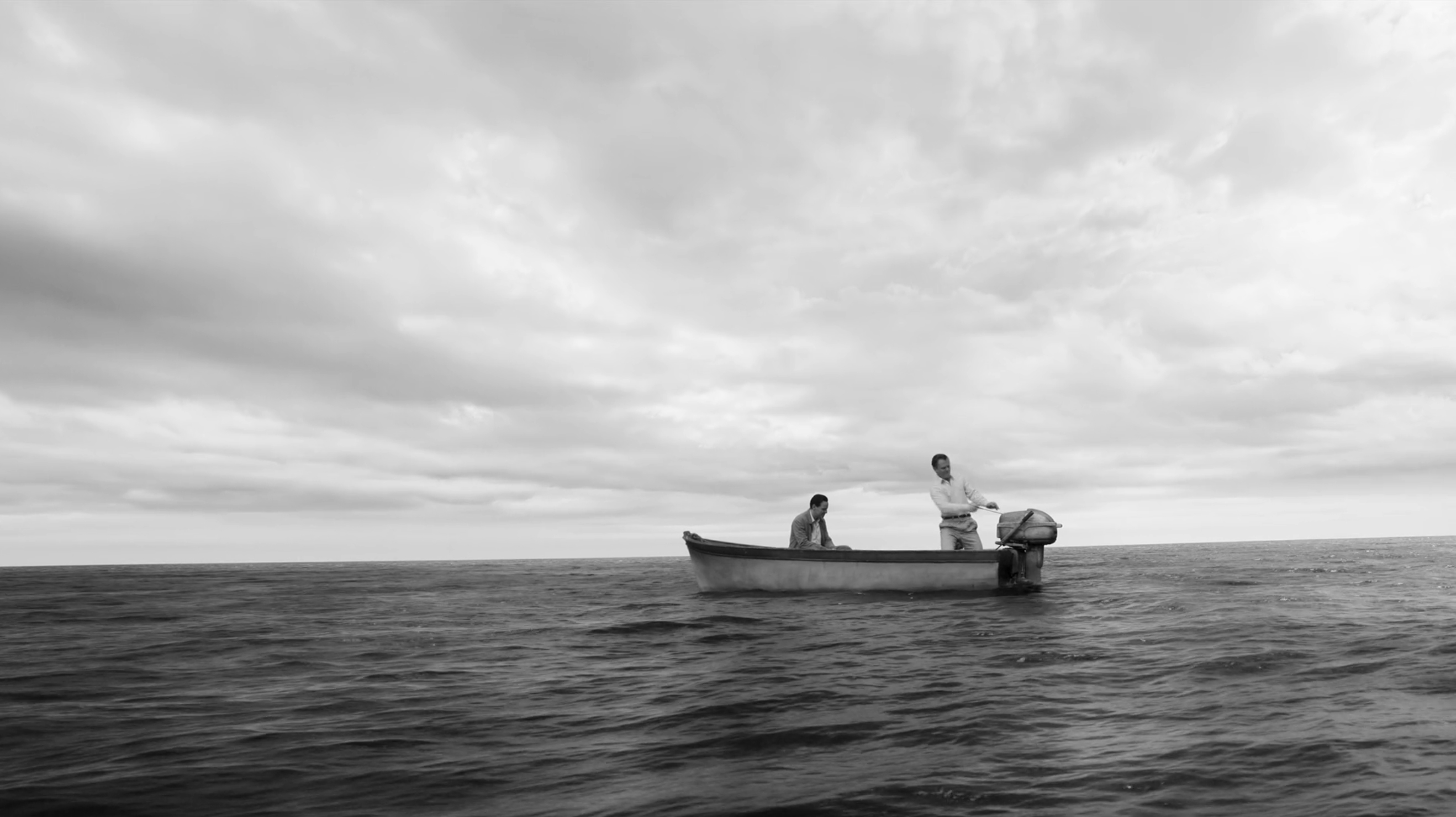
On the first murder…
Elswit: There was a wonderful effects guy who had a nice swimming pool. I think he did underwater photography for some things because the pool had a little viewing port down at the deep end. So, yeah, we were in a big swimming pool with three cameras and three cranes. We also had an underwater head so we could kind of sink it. I put greenscreen on three sides of the pool, then overlaid the top of it with a silk, which diffused the light. We didn’t want the light from the sky to be flat. It wasn’t supposed to be overcast or foggy. The light was going to have shape to it. So, I had to create shape on everybody’s face that was consistent as if we were saying, “If you’re looking straight down the center of the boat, on the port side the sun is up further right.” We were able to do that by having scaffolding all the way around the greenscreen, which I think was 25 feet high, where I could put lights and either bounce or diffuse them to create some sort of soft ambient shape on the actors. The WETA visual effects people did an astonishing job combining all of that and connecting the water, the boat and the sky.
The boat was actually pretty static for that. It turned a little, but most of the motion you see was created the same way as shooting spaceships at ILM [which Elswit did at the outset of his career in the early 1980s]. It’s all transferred motion. The boat [that looks like it’s moving] is static with the camera moving toward it, then we had these underwater little blowers that can make the water look like it has a wake. We spent six days there [for the murder] and probably three or four more getting them out there [to that spot in the water] and then Tom burning the boat and all that stuff. We also did a few pickups later, just tight shots.
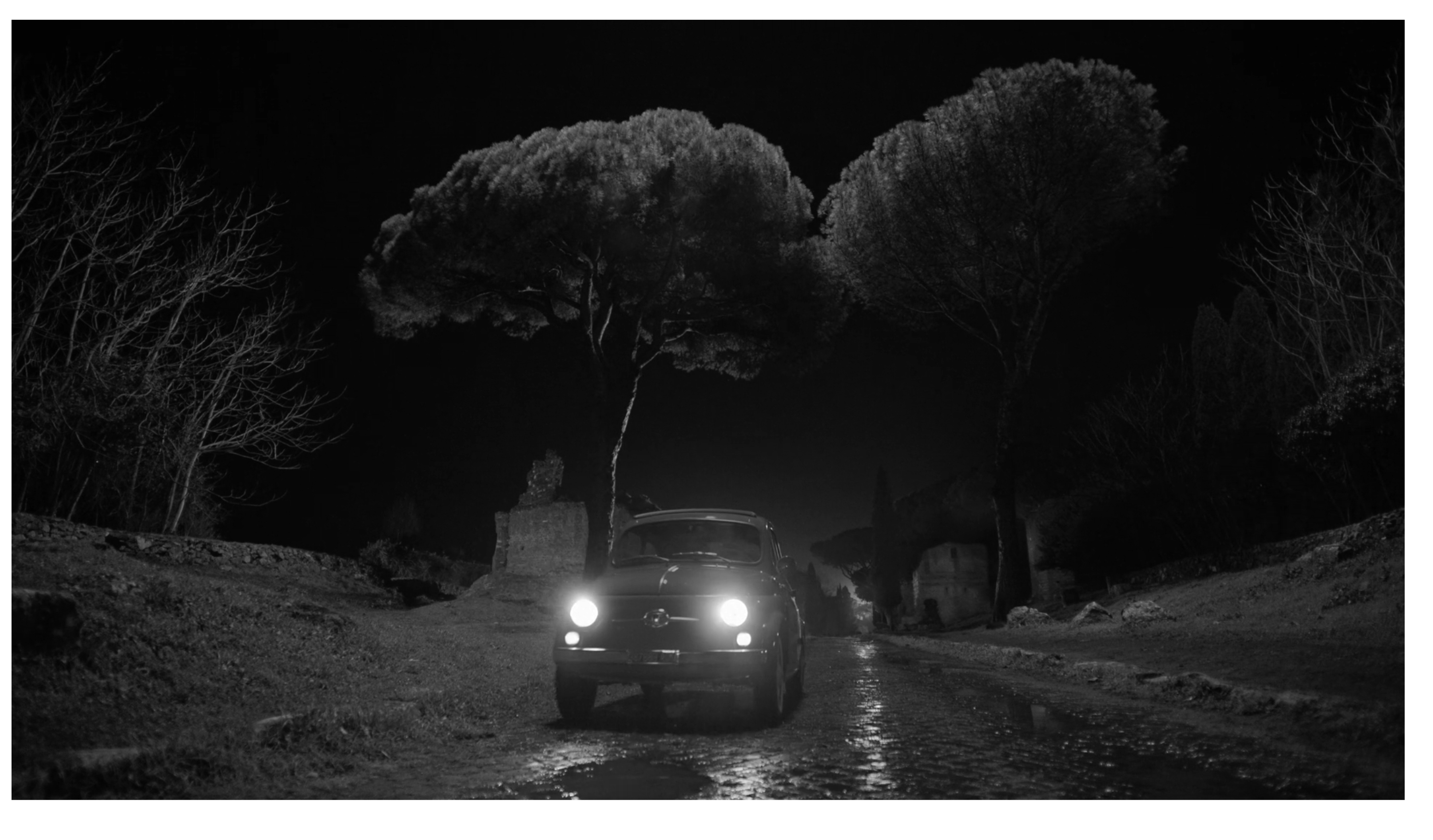 On lighting black and white…
Filmmaker: Whenever I talk to someone who’s shot in black and white, I like to ask about the lighting units they used, because they’re often dusting off things they haven’t employed in a while. Anything you broke out for Ripley that had been on the bench for a while? Any old tungsten units?
Elswit: Well, the old Mole-Richardson 10Ks at [the famed Rome studio] Cinecittà were something I hadn’t seen in a long time. But we still use tungsten lights, though I just did a movie without a single one. Using tungsten lights with Fresnel lenses is a wonderful way to work, but even with the bigger LEDs I can still create a strong shadow that imitates a tungsten Fresnel unit—though it’s not a perfect imitation. On Ripley I wanted strong shadows, big fall off and hard light. It’s not this sort of ambient daylight that we’ve gotten used to in color photography. So, I wouldn’t say that it was particularly about using different units. I just used what I had in a little more focused and direct way. I wasn’t creating soft window light. When I did fake direct sun, which I did in Atrani in Dickie’s villa and a little bit in Tom’s apartment that he rents in Rome, I used HMIs. In Dickie’s I think we had 10Ks coming through windows, which we don’t use that much anymore. In big shots in New York, we even had 20Ks for big backlights. I think a 20K is still a great backlight no matter what.


 deep fried movies