
Frame By Frame
Frame By Frame – Death Game (1977)
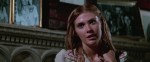
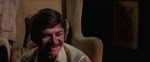
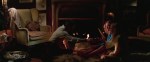
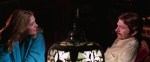
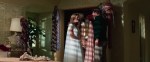
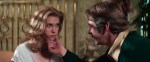
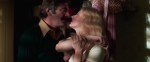
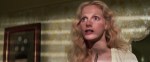
Year – 1977 Decade – 1970s Cinematographer – David Worth (imdb link) Director – Peter S. Traynor Genre – Horror; Home Invasion Shooting Location – Hancock Park, Los Angeles; San […]
Year – 1977 Decade – 1970s Cinematographer – David Worth (imdb link) Director – Peter S. Traynor Genre – Horror; Home Invasion Shooting Location – Hancock Park, Los Angeles; San […]
Year – 1977
Decade – 1970s
Cinematographer – David Worth (imdb link)
Director – Peter S. Traynor
Genre – Horror; Home Invasion
Shooting Location – Hancock Park, Los Angeles; San Francisco
Aspect Ratio – 2.39
Format – 35mm with Panavision anamorphic lenses
Also check out the archive’s collection of frames organized by category.
The Film
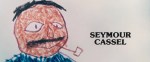
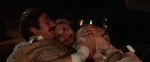
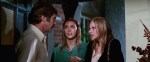
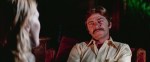
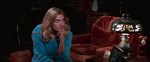
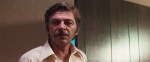
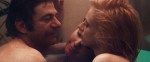
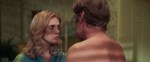
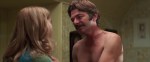
Home alone on his 40th birthday, a married San Francisco businessman (Seymour Cassel) finds a pair of stranded, rain-soaked girls (Sondra Locke, Colleen Camp) at his front door seeking help. He lets them in and surrenders to their advances, a decision he soon regrets as the girls refuse to leave and spend the weekend terrorizing him.
A relative obscurity for decades after release, interest in the movie has been spurred in recent years by a 2015 Eli Roth remake titled Knock Knock (with Keanu Reeves in the lead and Ana de Armas as one of the interlopers) and a Blu-ray from Grindhouse Releasing after a long history of spotty home video availability.
The film’s availability issues date back to its original theatrical release, which was held up for more than two years by investigations into the finances of Death Game director/producer Peter S. Traynor. A former insurance salesman, Traynor began funding real estate ventures and feature film productions in the early 1970s largely through the investments of California doctors seeking tax shelters. Though he produced several films, Death Game is Traynor’s only solo directorial credit.
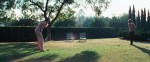
With the exception of a weekend in San Francisco collecting establishing shots during post production, the film was shot on location in the Hancock Park neighborhood of Los Angeles. Jack Fisk – a two-time Oscar nominee noted for his work with Terrence Malick, Brian De Palma and David Lynch – served as production designer. Fisk’s list of set dressers contains two notable names – his wife Sissy Spacek (post Badlands, but pre Carrie) and Bill Paxton. Before breaking through as an actor, Paxton worked in the art department on several productions. He first met frequent collaborator James Cameron when both were part of the regular crew for Roger Corman’s New World Pictures.
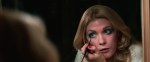
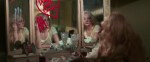
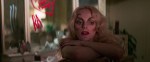
David Worth is credited as Death Game’s cinematographer and editor. He also dubbed Seymour Cassel’s voice for the entire film. That trio of roles is even more interesting considering Worth wasn’t even part of the movie when principal photography began.
Worth started his career in the early 1970s working in adult films under the pseudonym Sven Conrad – an amalgamation of his two favorite cinematographers, Sven Nykvist and Conrad Hall. A recommendation by Death Game actress Sondra Locke led to her longtime romantic partner Clint Eastwood using Worth for both Bronco Billy and Any Which Way You Can. He later helped launched Jean-Claude Van Damme’s nascent career by shooting Bloodsport and directing Kickboxer.
Here’s Worth on how he ended up as Death Game’s cinematographer…
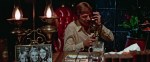
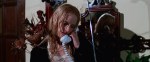
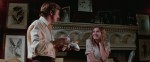
“It was one of the most important films in my professional life, even though it was only a very small film, a $150,000 film. I got a call from the producer, Larry Spiegel, who said he had seen my work and he wanted to work together, and he said the director, Peter Traynor, just fired the cinematographer and would I like to take over? I was a little reluctant to get into somebody else’s mess, but I said, “Who’s in the film?” They said Seymour Cassel, Sondra Locke, and Colleen Camp. I went, “Wow!’ Sondra Locke, who had been nominated for an Academy Award for The Heart is a Lonely Hunter, Seymour Cassel, who had been nominated for an Academy Award for Faces, and the new Colleen Camp, a beautiful young woman. So, I was thrilled. I jumped in with both feet. I hadn’t even read the script! I just showed up on set and they were shooting with a Panavision Panaflex camera, which was a new camera for me. I had been using 16mm a lot. And, since we had only thirteen days to complete the film, I decided to hand-hold the Panaflex the entire film because it was so ergonomically correct and well balanced you could just brace yourself against a table or chair or somebody’s leg and get great shots. That enabled us to move very quickly from setup to setup and not have to put up the tripod, level it, get it to do all that stuff then have to move it because somebody wanted a different angle. So that was how I got involved and how we captured the film…I was using very little lighting. I was just using small lighting in this because I had to move very quickly. I had two or three small, maybe 150 to 250 watt, lights.” (check out the original interview)
And Worth on his role as editor….
“A couple of months after (the movie) was done the director asked Sondra and I to come look at a screening and during the screening I’m saying, “Where’s this shot and that shot?” So (Peter Traynor) took me and Sondra to the editing room and I could see where things were so I edited and changed a few scenes, showing him that the editor was absolutely the worst editor you could possibly find. He was just not doing any service to the film. They fired him so I took over.” (check out the original interview)
And, lastly, how Worth became the voice of Seymour Cassel…
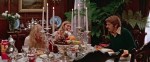
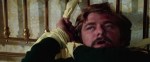
“Seymour and Peter (Traynor) hated each other after Peter had Sondra and Colleen throw food on him for an hour (for a scene in the film). He wanted to punch Peter out. He wouldn’t come in and do post production voiceover, wouldn’t do the ADR. So, Peter said, “Just do it. You’re an actor. Do it.” So, I had to ADR all of Seymour’s lines and then put it into his mouth….Today, you have Pro Tools. Pro Tools would’ve fixed this thing perfectly, but I didn’t have Pro Tools. All I had was 35mm film with four sprockets and I had to take out ¼ sprocket or put in ¾ of a frame and do that with every single line, so my voice was actually coming out of (Seymour’s) mouth. It was torture.” (check out the original interview)


































































 deep fried movies