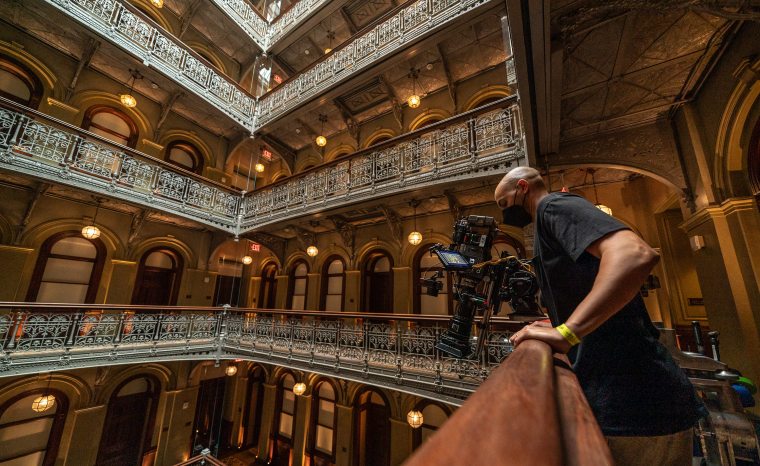
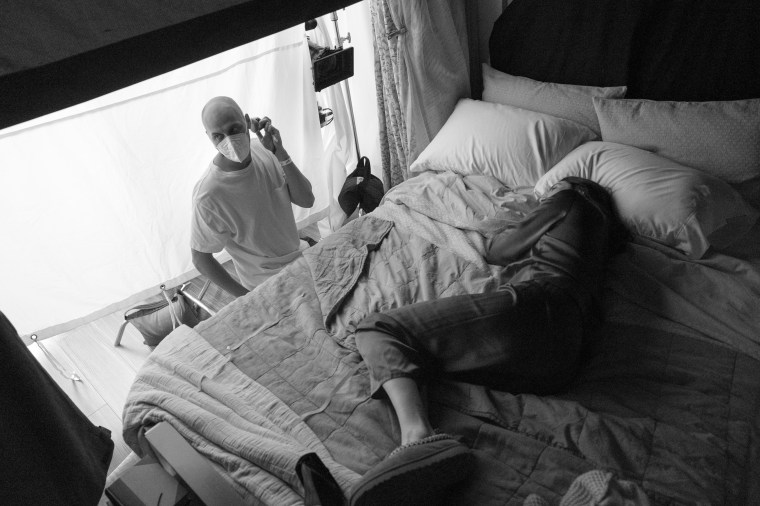
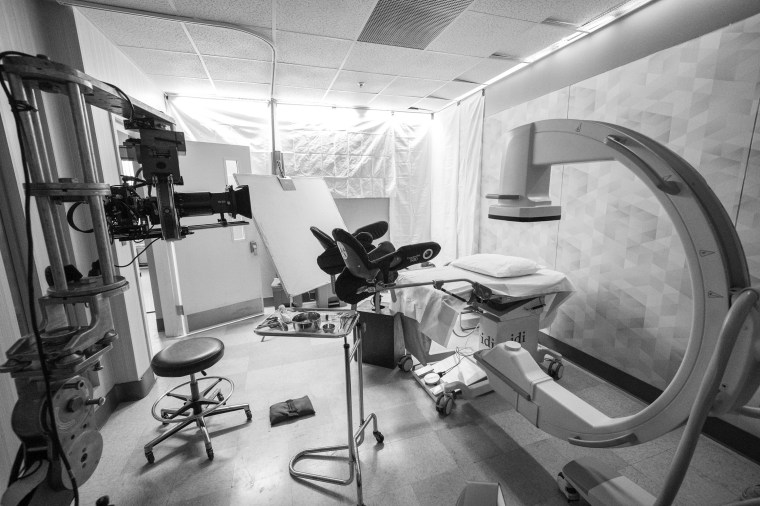
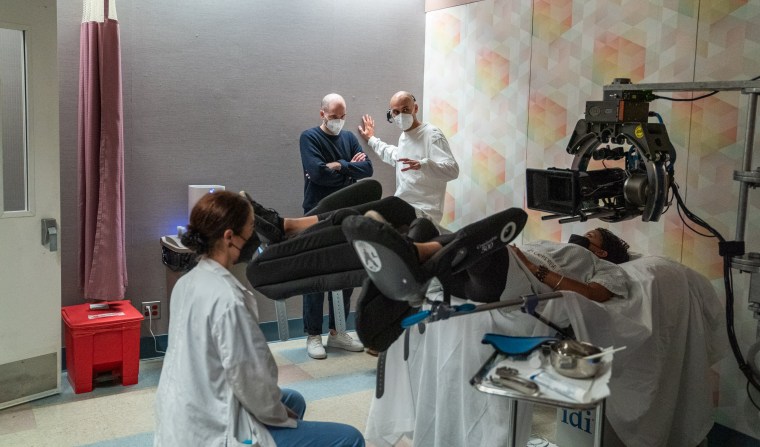
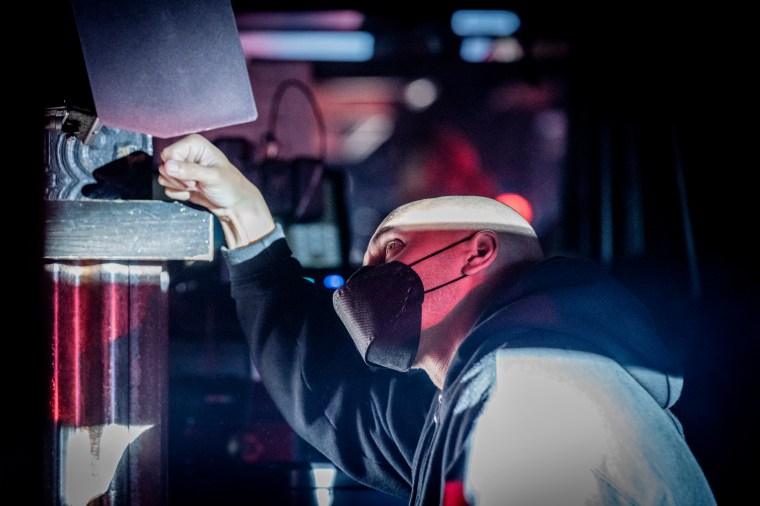
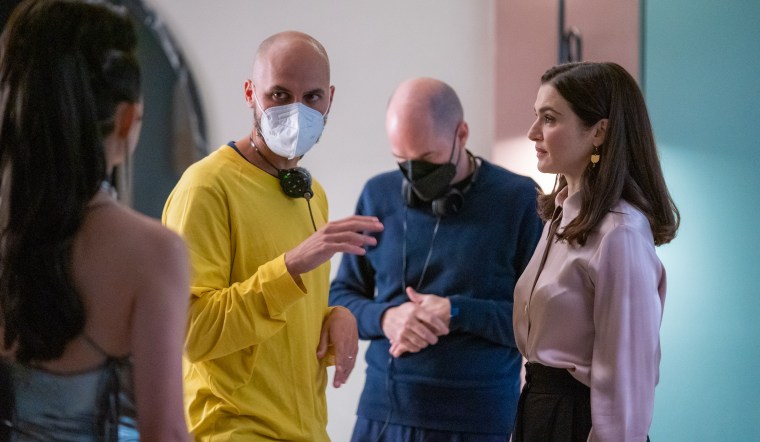
Dead Ringers cinematographer Jody Lee Lipes picked up an Emmy nomination today for his work on the limited series, which seems like an opportune time to share this interview I recently did with Jody for Filmmaker Magazine. Below are a few snippets from the story and a gallery of behind the scenes shots from the show, which features Rachel Weisz playing twin gynecologists in an updating of David Cronenberg’s 1988 film. Check out the full interview here.

Filmmaker: How did you get this close-up where the faces of the two twins seemingly blend together?
Lipes: That shot would be hard even if there were two actors. It’s a really precise visual thing and if somebody is even a millimeter up or down in the frame, the effect is totally destroyed. When you have to do that shot with the same person [in both positions], it’s a very painstaking and time-consuming process. It just takes patience and it’s also about Rachel’s patience too. It’s a lot of annoying, finicky placement stuff and Rachel was always totally on board for that.
Filmmaker: Did you shoot the top version of Rachel clean without her stand-in?
Lipes: We used Kitty [Hawthorne]—Rachel’s acting partner [who filled in as the other twin to give Weisz someone to play off]—to set up that shot, then right before [we rolled] we took her out of the frame. After we shot the A side, we laid that [on the monitor] over the B side to use as visual reference to get her in the right place in the foreground. Then you also shoot a plate with nothing there to be able to manipulate that as well.

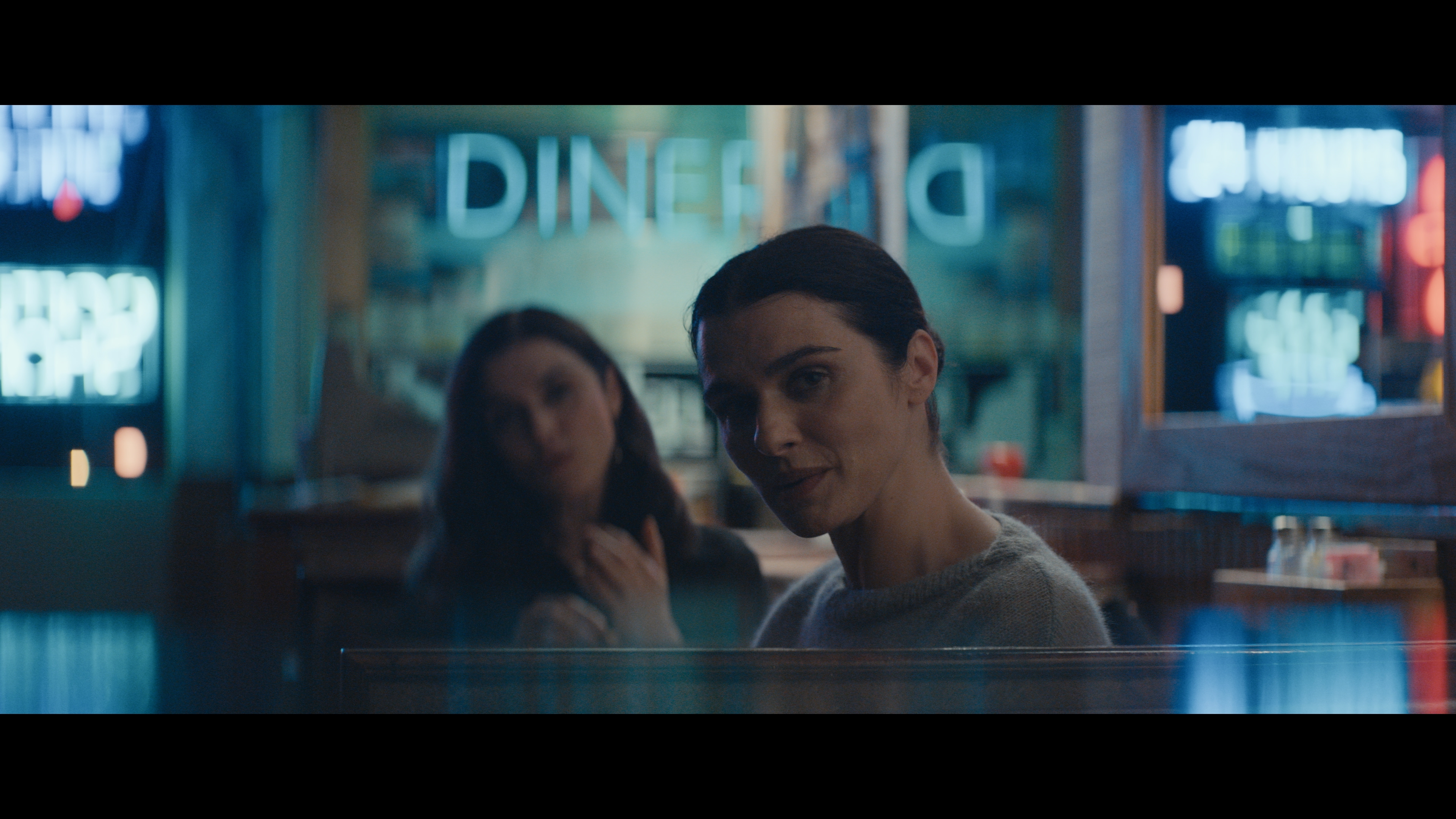
Filmmaker: In the diner scene that opens the show, there’s a rack focus from Weisz’s Elliot in the background to her twin sister Beverly in the foreground booth. Is that rack focus something you can program into the motion control rig?
Lipes: Yeah, the motion control is supplying you with a constant and that could be the framing, where you’re panning to and exactly at what time, or how quickly you are tilting. It can also be a zoom or a focus rack. The system can play all of those back for you based on what you’ve already shot and what you want to repeat precisely. You can isolate all of those things too if you don’t want to play any of them back and you want to do it manually. With the focus, a lot of the time you’re not wanting to play that back because it’s such a nuanced thing. You want to control that manually, so you can respond to what Rachel’s doing, because it’s never going to be identical to what the acting partner did [when she played that twin on the other side of the coverage]. Then it’s about making sure that if the focus between the first and second pass is slightly different in timing that they’re not conflicting with each other, which gets into Eric Pascarelli visual effects territory and deciding whether you want to not rack and just stay on one person the whole time and then the other person the whole time for the B side. If you do that, you want to make sure you supply the visual effects people with a reference of what out-of-focus would look like in this particular setting with this particular lens and this particular lighting.
Part of the reason I wanted to bring him Eric onto this was because of how honest he tries to be to the original photography and the lengths that he’ll go to honor what was happening in the room. Sometimes from the visual effects department it’s about being safe and saying, “This is going to be really hard, so maybe we shouldn’t do it.” With Eric, it’s more like, “This is what the shot should be, so let’s do it. These are the potential risks, and these are the elements we need to supply to the visual effects people to make it easier to deal with later, but we’re not going to shy away from doing things that are difficult.”
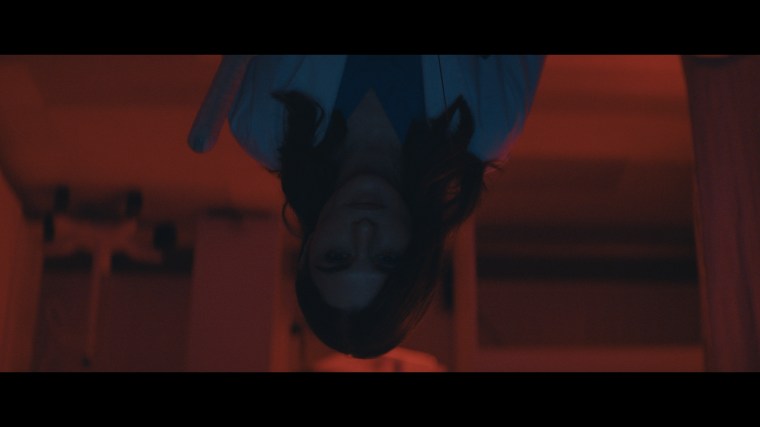
Filmmaker: There are a few moments in your episodes where there’s a mid-shot lighting change and the color red emerges. Thematically, what role does red play in Dead Ringers?
Lipes: It’s really something that comes in more after the first two episodes. It played a much bigger role in Laura’s work on the show. The places where it came into our episodes were moments where we started to feel Elliot showing signs of being a little bit off. One of those situations is where she climbs up on the counter of her apartment and starts eating food on all fours in the kitchen as the light shifts red. The other one [is in the shot pictured above], which is kind of like a nightmare at the beginning of episode two.
Filmmaker: That nightmarish sequence starts on a close-up of Beverly on an exam table, then tilts 180 degrees to an upside-down Elliot. Cronenberg’s version of Dead Ringers is relatively austere and functional in its camera movement. The way the camera moves in the series is definitely a point of departure.
Lipes: That shot was something that we figured out on the spot, trying to think of what would make that moment feel more nightmarish. We were also just thinking about economy—what’s the simplest way to shoot this that will get us inside the feeling of a dream that is disturbing our main character? A lot of the time I’m just trying to reduce shots and think about a way to do it in one shot, and that’s how that came together.







 deep fried movies